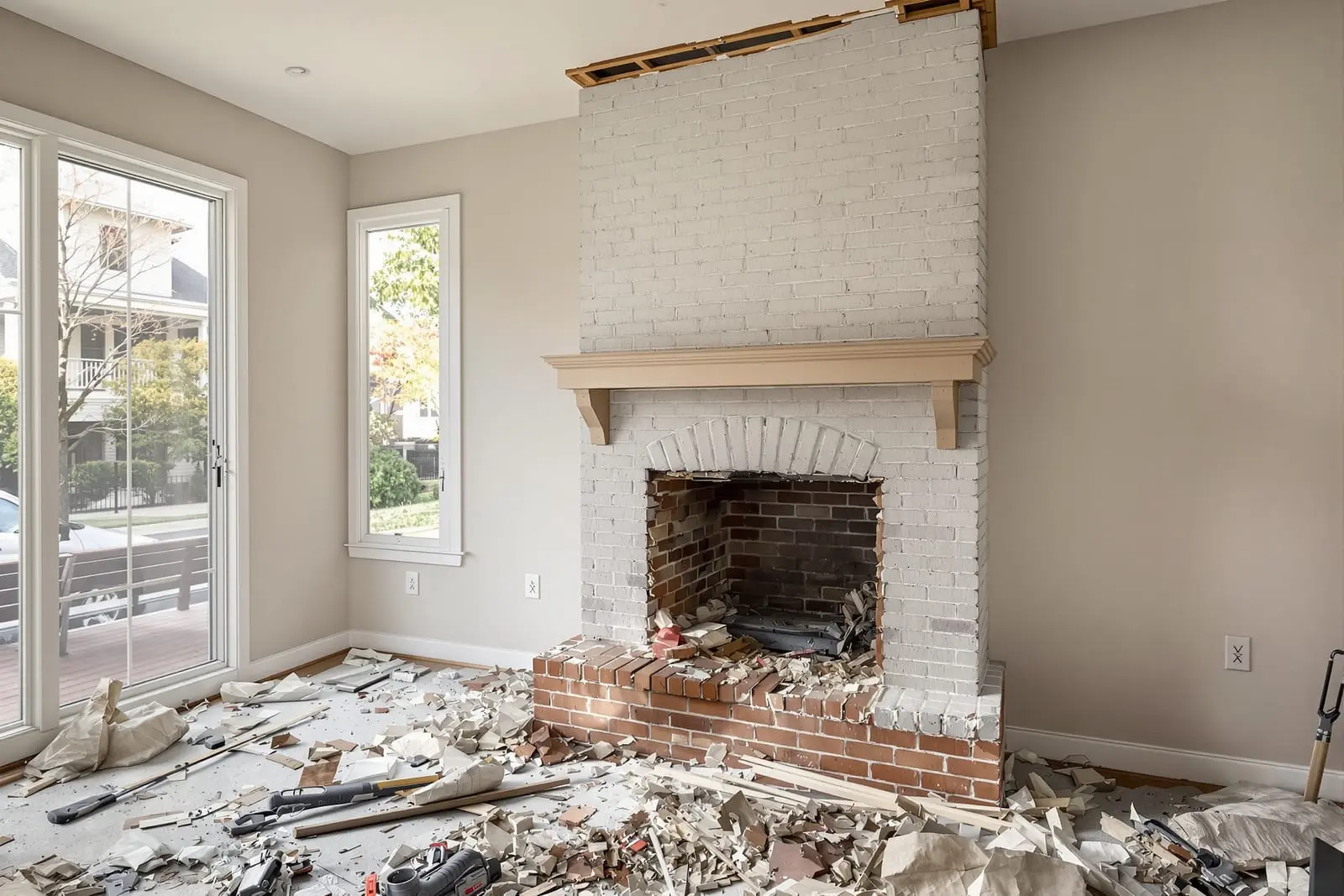
Our chimney and fireplace demolition services in Pittsburgh, PA address unsafe, leaking, or outdated masonry. We carefully dismantle chimneys from the roofline down or remove interior fireplaces and surrounds while protecting nearby finishes. All brick, flue tile, and debris is removed so you can repair, remodel, or reconfigure the space.
Wrexo Demolition Pittsburgh provides professional chimney demolition throughout Pittsburgh, PA and the surrounding area. Our licensed, insured crew delivers safe, clean, on-time work with a free estimate before anything begins. Call (412) 618-0591 or request your free quote.
Chimney Demolition Experts Serving Pittsburgh Homes and Businesses
Wrexo Demolition Pittsburgh provides precise, safe chimney demolition and fireplace removal for brick, block, stone, and metal systems throughout the Pittsburgh area. Whether you are dealing with a leaning masonry chimney in Bloomfield, a damaged prefab fireplace in a Mt. Lebanon split-level, or removing a rooftop chimney to install a new metal roof, our crew understands the structural and code issues that come with this type of work.
We start by confirming how your chimney is built and how it connects to the rest of your structure. Many older Pittsburgh homes in neighborhoods like Lawrenceville and the South Side have interior brick chimneys that support adjacent framing or pass through multiple floor levels. Others have exterior block chimneys tied into the siding or stucco. We never treat a chimney as “just cosmetic.” Instead, we verify load paths, nearby utilities, and any active flues before a single brick is removed.
Our focus is to eliminate chimney and fireplace hazards without creating new problems such as roof leaks, wall cracking, or smoke drafting issues with remaining appliances. Every chimney demolition project is planned around your specific house, not a generic template.
How Chimney Demolition Actually Works, Step by Step
When Wrexo Demolition Pittsburgh takes on chimney demolition, we follow a strict process designed around safety and protecting the rest of your building.
1. Assessment and documentation: We inspect the chimney from the firebox to the cap, including the attic and roof penetration. We check whether it is serving a furnace, boiler, water heater, wood stove, or only a fireplace. We also look for shared flues, gas lines, wiring, and water damage that can affect how the masonry behaves when dismantled.
2. Utility and appliance coordination: If your chimney still vents gas or oil appliances, we coordinate with your HVAC or plumbing contractor to reroute venting or replace equipment with direct-vent units. We do not disconnect fuel-burning appliances without a clear plan in place to keep your home safe and code compliant.
3. Containment and protection: Before demolition starts, we protect nearby finishes. Inside, we seal off the work area with plastic, cover floors, and set up dust control. Outside, we protect siding, windows, landscaping, and neighboring roofs where needed. In tight Pittsburgh rowhouses, we plan material drop zones so debris does not affect the shared property line.
4. Controlled hand demolition: In most residential projects, we break down the chimney from the top down by hand with hammers, rotary hammers, and small breakers. Rooftop work uses harnesses, roof brackets, and debris chutes or controlled bucket drops. We avoid heavy mechanical impact that can crack surrounding framing or plaster.
5. Structural checks and bracing: As we progress, we verify that floor joists, roof rafters, or walls that previously touched the chimney are properly supported. If needed, we add temporary shoring or coordinate with a carpenter or engineer to install permanent headers or studs.
6. Debris removal and cleanup: Brick, block, flue tiles, and metal are separated for recycling or disposal. Ash and soot are contained and vacuumed, not swept into the house. We leave the site ready for your next contractor, whether that is a roofer, mason, or remodeling crew.
Fireplace Removal, Firebox Demo, and Interior Repairs
Chimney demolition often goes hand in hand with fireplace removal inside the home. Wrexo Demolition Pittsburgh handles full or partial removal depending on your plans.
If you are eliminating a masonry fireplace completely, we remove the firebox, hearth, and any elevated hearth platform or decorative facing such as stone or tile. In many Pittsburgh homes, especially older brick houses, these elements are tied into the surrounding floor framing or sit on their own small foundation. We demo in stages so we do not disturb support for adjacent walls or joists.
For customers converting to an insert or gas unit, we may only widen, reshape, or partially remove the firebox and hearth. The focus in these projects is to create a clean, sound opening for the new appliance while keeping the rest of the chimney structure intact until the installer is ready.
When the fireplace projects into a living room or parlor, removing it leaves gaps in flooring, baseboard, and sometimes plaster or drywall. We do not claim to be your finish carpenter, but we do make sure framing edges are straight, surfaces are ready for flooring patching, and the wall cavity is accessible for insulation and mechanical upgrades. If you need referrals for local finish trades, we can connect you with contractors who are familiar with post-demolition repair work.
What Drives Chimney Demolition Cost in Pittsburgh
The cost of chimney demolition in Pittsburgh can vary widely, and Wrexo Demolition Pittsburgh is transparent about the factors that affect your price.
Key cost drivers include:
• Size and height of the chimney: A single-story metal flue chase is much easier and faster to remove than a tall brick chimney that starts in the basement and exits well above a steep roofline.
• Location and access: Interior chimneys that pass through multiple finished floors require more interior protection, debris handling, and labor. Tight access between houses in areas like Polish Hill or the North Side can limit equipment and increase manual handling.
• Condition of the masonry: Chimneys that are already crumbling may require more careful removal to avoid uncontrolled collapses, while extremely hard brick or reinforced block can increase tool time and disposal weight.
• Structural tie-ins: If the chimney supports or touches floor joists, roof framing, or bearing walls, we may need engineered solutions, additional shoring, or coordination with a framer. This adds time but protects your building.
• Scope of interior work: Removing just the rooftop portion costs less than taking out the full shaft and fireplace, patching floors, and closing wall openings.
We provide written estimates that break down these elements so you understand why your project is priced the way it is. There are no surprise add-ons for standard debris removal or basic site protection, which are already built into our chimney demolition proposals.
Permits, Codes, and Pittsburgh-Specific Considerations
Demolition work is regulated, and chimney removal is no exception. Wrexo Demolition Pittsburgh navigates the local requirements so your project does not stall.
Inside the City of Pittsburgh, chimney demolition can require a building or demolition permit, especially when you are removing structural components or altering exterior appearance. Suburbs like Cranberry, Ross, or Bethel Park have their own building departments and rules. We help identify which jurisdiction applies and, when contracted to do so, we can assist with permit applications or provide the documentation your general contractor needs.
If your property is part of a historic district or falls under an HOA or condominium association, there may be additional review before you can change the roofline or exterior façade. For example, some historic streets in areas like Mexican War Streets or Deutschtown expect you to retain visible brickwork or meet specific design guidelines when altering chimneys. We can provide photos, descriptions, and sequencing that help you obtain approvals.
Chimneys that vent active appliances must meet International Residential Code (IRC) and mechanical code requirements. If you are removing or shortening a chimney that currently serves a furnace, boiler, or water heater, you will need a code-compliant alternative venting method in place. We coordinate with your mechanical contractor so there is no period where an appliance is operating with inadequate venting, a serious safety and carbon monoxide risk.
Handling Common Chimney Demolition Problems Before They Become Disasters
Chimney and fireplace demolition in older Pittsburgh buildings frequently uncovers hidden issues. Wrexo Demolition Pittsburgh plans for these so they do not derail your project.
Common challenges include:
• Hidden structural reliance: Older homes sometimes rely on a brick chimney as an unplanned support for joists or roof rafters. When we see joists pocketed into the masonry or bearing on chimney shoulders, we pause demolition at that point and, if not already addressed in the plan, work with your engineer or framer to put in proper supports.
• Water damage and rot: Long-term chimney leaks can rot adjacent framing, sheathing, and flooring. Once the masonry is removed, the extent of damage becomes clear. We help document what we find with photos and measurements so your contractor can repair affected areas correctly.
• Soot and dust migration: Removing fireboxes and flues releases decades of soot and ash if containment is not handled correctly. Our crews seal registers, use negative air where feasible, and vacuum with filtered equipment so the rest of the house stays as clean as possible.
• Shared flues and unknown connections: In some multi-unit or duplex buildings, one chimney may serve more than one unit, or previous owners may have tied in appliances without permits. We identify these situations early, then coordinate with owners or managers so no tenant loses critical heat or hot water unexpectedly.
By anticipating these problems and building contingencies into the plan, we keep your chimney demolition predictable, even when your building is not.
Chimney demolition is specialized work that affects structural safety, weatherproofing, and mechanical systems. Wrexo Demolition Pittsburgh focuses on this type of selective demolition every week, not once in a while.
Our crews are trained in fall protection, confined-space awareness, and safe handling of masonry and steel components in tight conditions common to Pittsburgh neighborhoods. We carry proper insurance for demolition activities, not just general handyman coverage, and we can provide certificates on request.
We maintain professional communication throughout the project. That starts with clear scheduling and realistic durations, continues with daily updates when work is underway, and ends with a final walkthrough where we review what was removed, what was left in place, and what the next trades will need to do. If we promised to stop at a specific floor level or leave part of the chimney for aesthetic reasons, we verify that with you before cleaning up.
If you are planning a roof replacement, heating system upgrade, addition, or interior remodel that involves chimney or fireplace demolition, contact Wrexo Demolition Pittsburgh for a site visit and detailed plan. Our goal is to remove the old chimney safely and cleanly so your new work starts on a solid, code-compliant foundation.
“
Professional chimney and fireplace demolition, done right the first time, quality materials, honest pricing, and results that last.
Wrexo Demolition Pittsburgh
Chimney and Fireplace Demolition Across Our Service Area