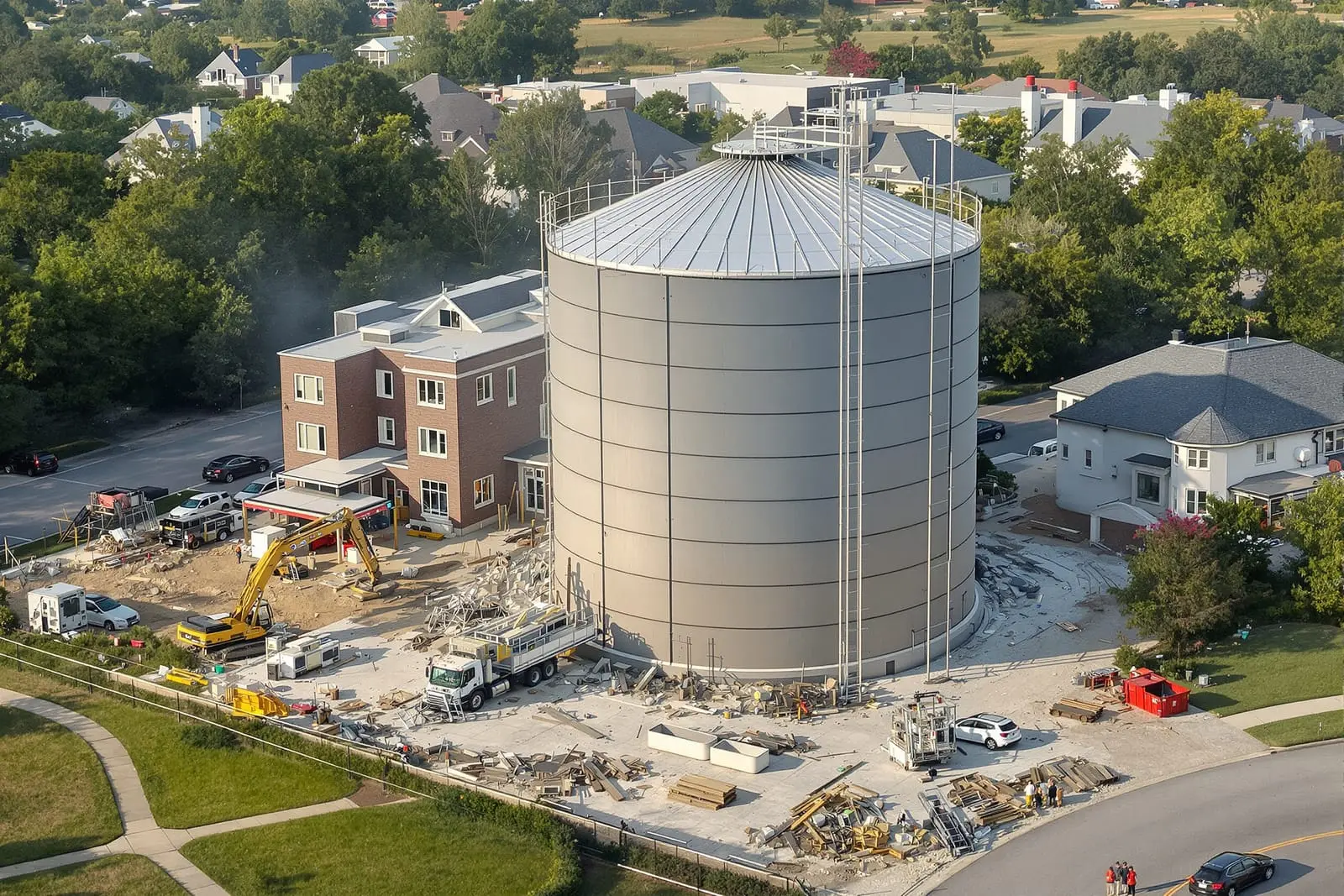
We perform tank demolition in Pittsburgh, PA for industrial silos, storage tanks, and smokestacks. Our crews use cranes, cutting torches, and mechanical equipment to carefully dismantle or drop structures in controlled zones. Safety planning and environmental precautions guide every step on active industrial sites.
Wrexo Demolition Pittsburgh provides professional tank demolition throughout Pittsburgh, PA and the surrounding area. Our licensed, insured crew delivers safe, clean, on-time work with a free estimate before anything begins. Call (412) 618-0591 or request your free quote.
Tank, Silo and Stack Demolition in Pittsburgh, Done the Right Way
Tank, silo, and stack demolition is not a one size fits all job. Every structure has a different history, foundation, and surrounding risk. At Wrexo Demolition Pittsburgh, we start by treating your site like a puzzle we have to solve safely before we touch a torch or unbolt a flange.
You will first see us walk your property and measure clearances to power lines, rail spurs, nearby buildings, and roads. We look at access for cranes and excavators, the condition of ladders and platforms, and how we can bring material down without drifting onto neighbors or the street. In older Pittsburgh industrial sites, we also expect surprises like homemade repairs, added platforms, and undocumented pipe tie ins.
Next, we confirm what the structure handled in the past. A steel fuel tank behind a trucking yard, an old concrete grain silo near the rivers, or a brick smokestack from a steel mill all get very different handling because of residue and stability. We request drawings if you have them, but we never rely on blueprints alone. Our crew taps, probes, and, if needed, cores concrete or steel to understand thickness and any internal liners.
Only after this field work do we choose a demolition method, mechanical, cut and lower, or, in some very specific stack cases, controlled directional felling. The goal is simple. Bring it down in a controlled way, keep everyone safe, and leave you with a site that is ready for the next phase of your project, whether that is a new tank, a parking lot, or complete site redevelopment.
How Tank Demolition Actually Works (Steel, Concrete, Aboveground and Underground)
Tank demolition in Pittsburgh usually falls into a few categories: aboveground welded steel tanks, bolted panel tanks, concrete water tanks, and, less often, underground storage tanks. Each type has its own process and cost drivers.
For aboveground steel tanks, we start with isolation. Our crew verifies that all product lines are disconnected and blanked and that vents are open so the tank can breathe. If it held fuel, solvents, or chemicals, we coordinate cleaning and gas freeing. In many older Allegheny County facilities, that means arranging for a certified industrial cleaner to remove sludge and wash the interior. We do not cut into a tank until explosive gas readings are at safe levels.
Once clean, we set up mechanical support around the tank. For smaller tanks, an excavator with a shear or grapple can bite the shell from the top down. For taller or larger diameter tanks, we often hand cut openings and create lifting points. A crane can then hold shell sections while our torch operators cut them free so the pieces can be lowered to the ground, not dropped. This approach is slower, but it protects nearby buildings and utility runs that are common on tight Pittsburgh industrial parcels.
Concrete tanks are different. After draining and cleaning, we typically cut openings with saws or hydraulic breakers, then use an excavator with a hammer and bucket to chip and break the shell down section by section. Rebar is separated from concrete on site so you can recover scrap value. Underground tanks add another layer: excavation around the tank, confirmation of no remaining product, cutting and cleaning, then removal or in place closure depending on state and local requirements.
What drives cost for tank demolition here is usually access, residual product handling, tank size and height, and disposal. Tanks near the rivers or in dense neighborhoods often demand smaller machines, more hand cutting, night or weekend scheduling to avoid traffic, and detailed planning to protect adjacent structures. Wrexo Demolition Pittsburgh accounts for all of this in writing so you know what your price actually includes.
Silo and Stack Demolition Techniques That Fit Pittsburgh Sites
Silos and stacks challenge our crew in different ways than tanks. They are tall, often slender, and usually closer to occupied buildings or active production lines. Around Pittsburgh, we see a lot of reinforced concrete grain silos, precast agricultural silos, and old brick or concrete smokestacks from mills and power houses.
For silos, the first question is: can we get a crane or high reach excavator close enough to work from the top down. If we can, we install access, set up fall protection, and begin nibbling the structure from the top using hydraulic shears or breakers. Concrete comes down in manageable chunks that are guided to a debris zone we lay out with you beforehand. If you want, we can crush and stockpile the concrete on site for use as fill or base material, which can save you money on trucking and stone.
If the silo is part of a cluster, we may partially separate it from neighbors before bringing it down. This can involve saw cutting or selective internal demolition to avoid damaging the silos you plan to keep. On farms or industrial yards in the Pittsburgh region, we also pay attention to buried utilities, wells, and nearby barns or warehouses that may not be on recent drawings.
Stack demolition depends heavily on stability. Old brick stacks along the rivers might look solid from the ground but can be hollowed out by weather and past repairs. We climb and inspect, often using drones for initial assessment, then decide between hand dismantling, mechanical top down removal, or, for isolated stacks with enough clear fall area, controlled felling with engineered cuts at the base.
Hand dismantling is slower but very precise. Our crew works in sections from platforms or man baskets, removing masonry or concrete and reinforcing, then lowering debris with chutes or by crane. Controlled felling, when it is the right choice, means we carefully cut and weaken the stack on one side, place pulling equipment if needed, and let gravity bring it down into a preset fall zone that we have cleared and protected.
Safety, Permits, and Local Conditions for Demolition in Pittsburgh
Tank, silo, and stack demolition touches a lot of regulations, and Pittsburgh has its own realities on top of state and federal rules. Wrexo Demolition Pittsburgh handles the technical end, but it helps if you know what is happening in the background.
In the city or surrounding townships, taller structure demolition and any work that could affect public streets, sidewalks, or utilities usually requires permits. These can involve building departments, fire departments, and sometimes local air quality agencies. If we are cutting into tanks that held fuel or chemicals, we follow environmental regulations for cleaning, transport, and disposal or recycling of sludge and rinsate. Our estimates indicate where we expect third party testing or environmental oversight so there are no surprises.
Safety planning starts well before the first cut. We set exclusion zones on the ground, analyze potential collapse patterns, and identify overhead risks like power lines and communication lines, which are common in older Pittsburgh industrial areas. When needed, we coordinate with utility companies to de energize or protect lines during high reach work.
Season and weather also affect how and when we work. Pittsburgh winters bring freeze and thaw cycles that can make access roads, slopes, and foundations unstable, especially near the rivers or on hillsides. Heavy snow or ice on ladders and platforms makes top down work more hazardous. For that reason, large top down silo and stack jobs often schedule for late spring through early fall when wind and footing are more predictable. Winter is still workable for many tank demolitions, especially if the site is flat and accessible, but we may plan more ground based cutting and fewer high elevation operations during storms or extreme cold.
Noise, dust, and debris control are another local concern. In neighborhoods where industrial and residential properties sit side by side, we often cut during set hours, use misting systems to knock down dust, and load out scrap promptly. All of these details go into our site specific plan, which we walk through with you before work starts.
What Affects Price and How Wrexo Demolition Pittsburgh Helps You Plan
The cost of tank, silo, and stack demolition in Pittsburgh is driven by a mix of structure specific and site specific factors. Knowing these upfront helps you compare bids and avoid low numbers that grow later.
Structure size and height are obvious factors. A small steel tank behind a shop can often be completed in a day or two with one machine. A tall reinforced concrete silo or 200 foot stack, especially on a tight site, can run several weeks. Material type matters as well. Heavy reinforced concrete or refractory lined stacks take more labor and machine time to break apart and process than thin shell steel.
Access and staging space are big drivers in the Pittsburgh area, where many older facilities sit on hillsides or in narrow river valleys. If we can set a crane and trucks close by, work goes faster and costs less. If we have to use smaller machines, temporary access roads, or staged street closures, costs rise. Surrounding risk is another variable. Working over active production, next to live utilities, or inches from a building you want to keep demands more hand work and engineering.
Environmental and disposal costs round out the picture. Cleaning and certifying tanks gas free, disposing of contaminated wash water, and hauling material to approved facilities are all line items. On the positive side, scrap steel from tanks and reinforcing recovered from concrete can offset some of your project cost. We indicate expected scrap values in our proposals when quantities are significant.
When you contact Wrexo Demolition Pittsburgh, we typically start with a short phone call to understand your structure type, location, and goals. Then we schedule a site visit to confirm conditions. Shortly after that, you receive a written scope of work that explains our demolition approach, estimated schedule, site protection measures, and a clear price breakdown. That way you are not just picking a number, you are choosing a plan that fits your property and your schedule.
“
Professional tank, silo and stack demolition, done right the first time, quality materials, honest pricing, and results that last.
Wrexo Demolition Pittsburgh
Tank, Silo and Stack Demolition Across Our Service Area