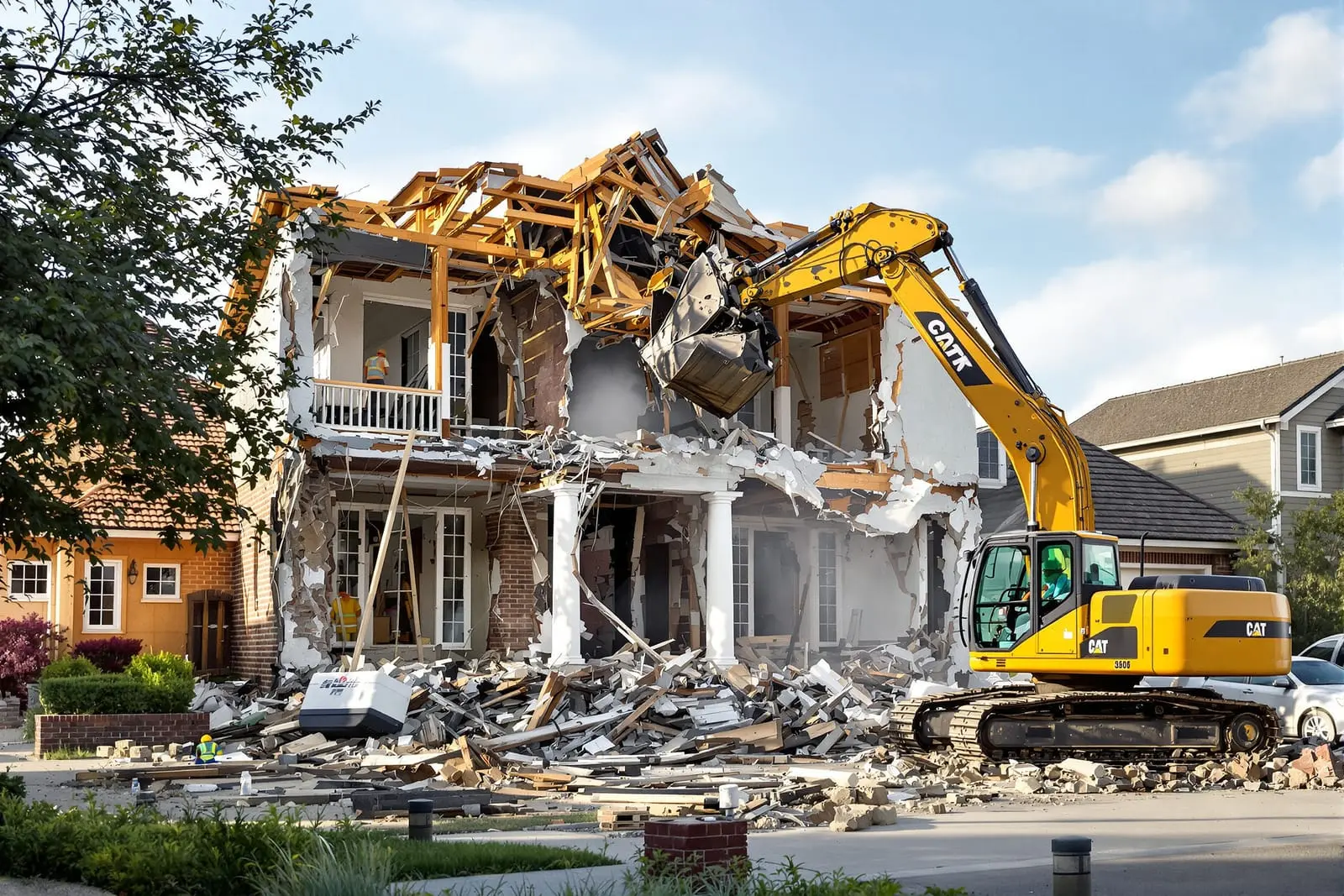
We provide whole house and structural demolition services in Pittsburgh, PA for properties that need complete removal. Our team handles permitting support, utility coordination, and safe structural tear down from start to finish. With controlled equipment use and thorough debris cleanup, we leave your lot clear and ready for the next phase.
Wrexo Demolition Pittsburgh provides professional whole house demolition throughout Pittsburgh, PA and the surrounding area. Our licensed, insured crew delivers safe, clean, on-time work with a free estimate before anything begins. Call (412) 618-0591 or request your free quote.
Whole House Demolition in Pittsburgh, Done the Right Way
When you decide to take a house down, you only get one shot to do it safely and cleanly. Wrexo Demolition Pittsburgh focuses on whole house demolition and structural tear downs across the Pittsburgh area, from tight city lots in Lawrenceville to older properties in Dormont, Bethel Park, and Penn Hills.
Whole house demolition usually means taking a structure all the way down to the foundation or removing the foundation as well so the lot is ready for new construction, sale, or green space. Structural demolition can also mean selectively removing major load‑bearing parts of a building while protecting what you want to keep, like a newer addition or a neighboring garage.
Every project starts with a site visit. We walk the property with you, look at access for equipment, check how close your neighbors are, and identify hazards like old fuel oil tanks, sagging roofs, or crumbling chimneys. We also look at the age of the house because that often tells us whether we should expect asbestos, lead paint, or knob‑and‑tube wiring, which are very common in Pittsburgh’s older housing stock.
From there, Wrexo Demolition Pittsburgh builds a clear plan and written estimate, so you know exactly what is included, how long it will take, and what your property will look like when we are finished.
Permits, Utilities, and Local Rules in Pittsburgh
Pittsburgh and the surrounding municipalities have very specific rules for whole house demolition, and ignoring them can stop a project midway or create expensive delays. Our team routinely works with the City of Pittsburgh Department of Permits, Licenses, and Inspections (PLI) as well as suburban borough offices like Mt. Lebanon, Ross, and Monroeville.
For homes inside city limits, a demolition permit is almost always required. In many cases you must provide a site plan, proof of property ownership, a description of how debris will be handled, and verification that utilities have been disconnected. Wrexo Demolition Pittsburgh handles the paperwork and coordinates the inspections tied to the demo permit so you are not chasing separate approvals on your own.
Utility shutoffs are critical. We contact the appropriate utility providers (Duquesne Light, Peoples Gas, Pennsylvania American Water, and local sewer authorities) to schedule disconnection or cut and cap services at the street. This step is scheduled before any machine touches the building. On the day work begins, our crew confirms that electric, gas, water, and sewer are safe, and we document the status if the township or city inspector wants proof.
In older neighborhoods with narrow streets or no alleys, we may also create a traffic or parking plan, often required by the city for dumpsters and heavy equipment. If your property is part of a homeowners association, we can provide the documents and schedule details you need to get HOA approval before work starts.
How Whole House and Structural Demolition Actually Happens
A typical whole house demolition in Pittsburgh follows a clear sequence so there are no surprises.
1. Pre‑demolition interior work. Before any exterior walls come down, we complete an interior strip out. This includes removing appliances, loose trash, and sometimes non‑structural finishes if salvage or recycling is planned. If asbestos‑containing materials or lead hazards are present, a licensed abatement contractor handles those items first, and we coordinate our schedule with theirs.
2. Equipment staging and safety setup. Wrexo Demolition Pittsburgh brings in the right machines for your site, most often an excavator with a hydraulic thumb, sometimes a skid steer for tight access. We set up safety fencing, signage, and if needed, protective plywood or temporary barriers to shield neighboring structures.
3. Structural takedown. Our operator starts with the roof and upper walls, working from the least stable areas inward. The goal is a controlled collapse so materials fall inward onto the house footprint, not onto the street or neighbor yards. Masonry chimneys, stone foundations, and tall party walls between row homes are taken down in lifts to avoid cracking adjoining buildings.
4. Sorting and loading debris. As material comes down, we separate concrete, metal, clean lumber, and mixed trash. Clean concrete and brick can sometimes be crushed for fill, while scrap metal is recycled. This sorting reduces disposal fees and can help offset your overall cost.
5. Foundation and below‑grade removal. Depending on your project, we either break up and haul away the foundation or leave it in place if your builder or engineer has requested that. If footers are removed, we also over‑excavate soft spots, old cisterns, or buried debris that could cause future settlement.
6. Backfilling and grading. Once structures and unsuitable soils are gone, we bring in compactable fill, install it in layers, and compact to reduce future sinking. The final grade is shaped to your plan, often pitched slightly to shed water away from neighboring lots.
Throughout this process, dust control is constant. We use water trucks or hoses to keep dust down, especially important in dense Pittsburgh neighborhoods and near busy roads. Our crew is trained to watch for unmarked utilities, underground tanks, or unexpected structural weaknesses and to pause work if anything looks unsafe.
What Affects Whole House Demolition Cost in Pittsburgh
Every house is different, and so is every demo price. Wrexo Demolition Pittsburgh works hard to be transparent about what drives your cost so you can compare estimates accurately.
Structure size and type. A compact single‑story frame house in Brookline will almost always cost less to demolish than a three‑story brick building in Bloomfield. Masonry and stone take more time to break and load, and they are heavier, which increases disposal costs by weight.
Access and site constraints. If we can get standard equipment right up to the building, work is faster and cheaper. Tight hillside properties in places like Mount Washington or West End, or lots where we must use smaller machines and hand work, will take more hours. Limited space for dumpsters can mean extra hauling trips.
Hazardous materials. If testing reveals asbestos in flooring, pipe wrap, or siding (very common in older Pittsburgh homes) or significant lead hazards, those items must be abated or handled under strict rules before demolition. We coordinate with licensed abatement partners and reflect that scope clearly as a separate line item in the proposal so you can see what you are paying for.
Debris disposal and recycling. Landfill and transfer station fees in the Pittsburgh area are based on weight. Heavier structures, wet debris, and mixed waste cost more to dispose of. By separating metals and clean concrete for recycling where practical, we can sometimes keep fees down.
Final condition of the lot. Some owners only need a rough grade so a future builder can take over. Others want a build‑ready pad with imported fill, topsoil, and seeding. The more detailed and finished you want the site, the more time and materials are involved. We spell out exactly what “finished” means in your Wrexo Demolition Pittsburgh contract so expectations match the final result.
How to Prepare and What to Expect From Wrexo Demolition Pittsburgh
Good preparation on your side makes the whole process smoother and often saves money.
Before we mobilize, remove personal belongings and anything you want to keep, like historic doors, mantels, or fixtures. Tell us in advance if there are items you would like us to carefully salvage so we can plan the sequence and equipment accordingly. If tenants still occupy the property, we can help you plan a realistic move‑out and utility shutoff timeline.
If there are neighboring fences, shared driveways, or retaining walls close to the house, we will document existing conditions and, if needed, talk to your neighbors about what to expect. In many Pittsburgh neighborhoods, properties are very close, so clear communication avoids surprises. Our crew is used to working with concerned neighbors and curious passersby, and we maintain secure barriers and signage during the entire project.
On demolition day, you will see the crew arrive, set up fencing and hoses, and walk the property one more time. A supervisor remains on site while active work is happening, and you will have a direct contact number in case you have questions. At the end of each day, materials and machines are secured and streets and sidewalks are swept as needed.
After the structure is gone and grading is complete, we conduct a final walkthrough with you. We confirm that utilities are properly capped, debris has been removed, the lot is graded as agreed, and any required inspections are scheduled. We can also provide photos and documentation your builder, lender, or the city might need.
If you are planning a new build, Wrexo Demolition Pittsburgh is happy to coordinate with your architect or general contractor early so the demolition plan, finished grades, and access routes match their construction plans. That coordination up front helps avoid rework and unexpected costs once your new project begins.
“
Professional whole house and structural demolition, done right the first time, quality materials, honest pricing, and results that last.
Wrexo Demolition Pittsburgh
Whole House and Structural Demolition Across Our Service Area