Home › Commercial Demolition Debris Hauling and Disposal
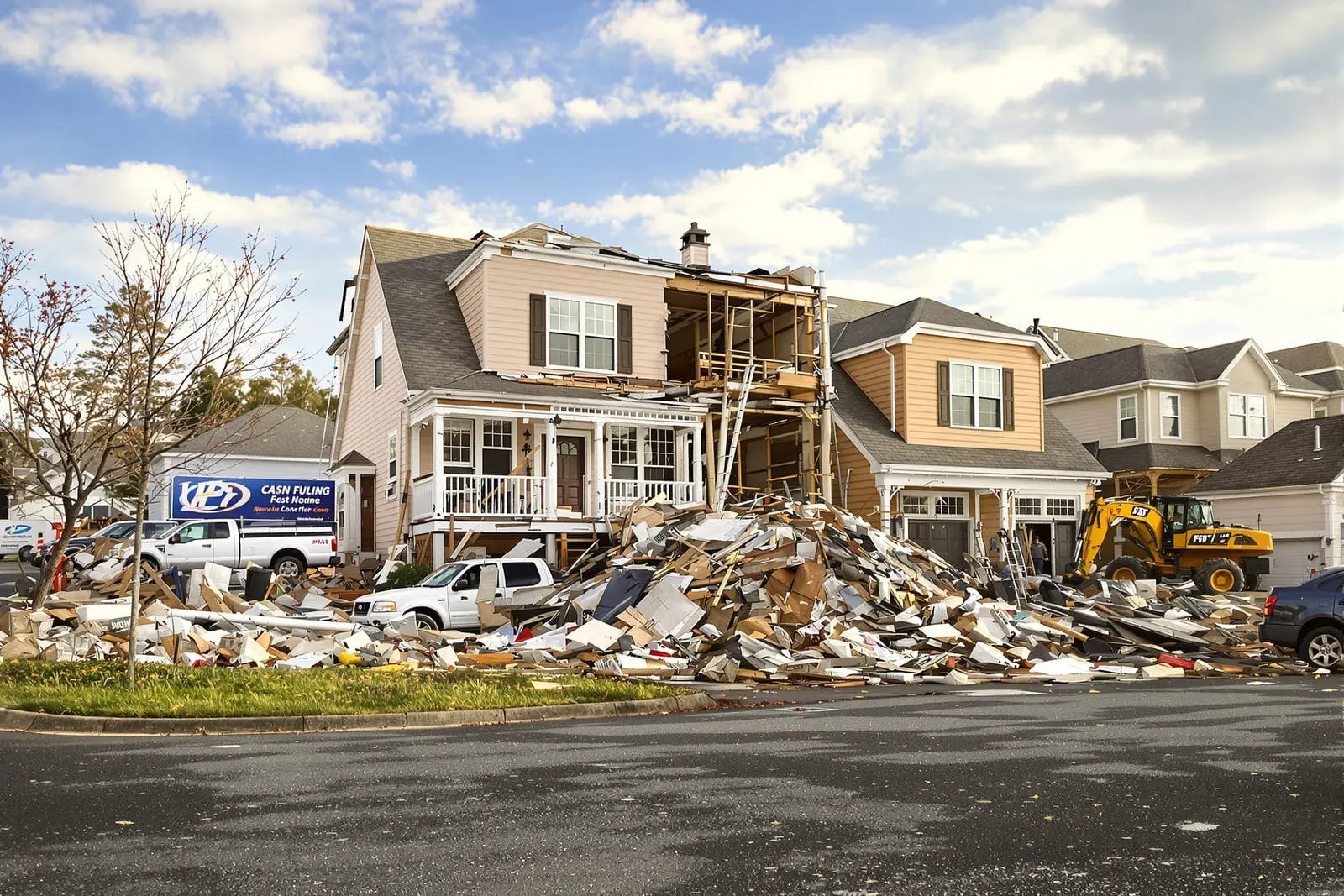
We provide commercial demolition debris removal in Pittsburgh, PA for projects of all sizes. Our fleet of roll offs and dump trucks hauls concrete, steel, masonry, and interior debris to appropriate recycling and disposal facilities. Efficient debris management keeps your site clean, safe, and ready for the next construction phase.
Wrexo Demolition Pittsburgh provides professional commercial demolition debris removal throughout Pittsburgh, PA and the surrounding area. Our licensed, insured crew delivers safe, clean, on-time work with a free estimate before anything begins. Call (412) 618-0591 or request your free quote.
Commercial Demolition Debris Removal in Pittsburgh, Done Right
Commercial demolition does not end when the structure comes down. The real test of a safe, compliant project is what happens to the debris. Wrexo Demolition Pittsburgh focuses on commercial demolition debris removal that keeps your site clean, your project on schedule, and your liability low.
We handle debris from interior office strip outs, warehouse and plant teardowns, retail remodels, multi story commercial buildings, and mixed use properties across the Pittsburgh region. Our crews manage the full cycle, from on site sorting and loading to hauling and final disposal or recycling, so your general contractor or facilities team can stay focused on construction.
Every project starts with a walk through of your building or site. We identify load out paths, elevator or dock access, staging areas for roll off containers, and any materials that require special handling, such as suspected asbestos containing material, PCB ballasts, mercury lamps, or refrigerants. That planning step is what allows debris removal to run smoothly in tight Pittsburgh job sites with limited access and active neighboring businesses.
How Our Commercial Debris Hauling Process Works
Wrexo Demolition Pittsburgh follows a structured, repeatable process so your debris removal is predictable and documented.
1) Site assessment and logistics plan: We measure distances to loading points, check overhead clearances for trucks, map material flows from the demo area to containers, and coordinate with your GC, property manager, or building engineer. In dense areas like Downtown, the Strip District, and Oakland, we also review alley access and loading zone restrictions.
2) Container and equipment selection: Based on volume and material type, we specify a mix of 10, 20, 30, or 40 yard containers, compactors for high volume light waste, and specialized bins for separated metals or concrete. Interior projects often use smaller containers or dumpsters on wheels to shuttle material to an exterior roll off.
3) On site sorting and loading: During demolition, our crew separates concrete, masonry, scrap metal, clean wood, and general construction and demolition debris as practical. This reduces landfill tonnage and often lowers your haul off cost. We use skid steers, mini excavators, or manual labor depending on floor load limits and building rules.
4) Hauling and disposal: Fully loaded containers are swapped out on a scheduled or on call basis. Material is weighed at local transfer stations or landfills, then routed to disposal or recycling facilities that can handle the specific waste stream.
5) Documentation: Upon request, we provide weight tickets, recycling diversion summaries, and disposal site details, which are important for LEED projects, corporate ESG reporting, or internal risk management.
What Drives the Cost of Commercial Demolition Debris Removal
Two projects with similar square footage can have very different debris removal costs. Wrexo Demolition Pittsburgh gives line item clarity on what is affecting your price so you can control what is controllable.
Key cost drivers include:
• Type and density of material: Concrete slabs, CMU block, brick, and roofing ballast are heavy and drive tonnage based fees. Light materials like drywall, ceiling tile, and insulation are volume based and may require more container pulls.
• Access conditions: High rise interiors that rely on freight elevators, downtown sites with limited staging, and projects that require hand carrying down stairwells will cost more than ground level dock loading with direct truck access.
• Required separation: If your lease, corporate standards, or green building goals require meeting a specific recycling diversion rate, we plan for additional labor and equipment to separate materials. The extra effort is often offset by scrap metal revenue, but it does change the labor profile.
• Special handling: Materials like asbestos containing floor tile and mastic, lead based paint debris, contaminated soils, or tanks with residual product cannot be handled as ordinary construction and demolition waste. We coordinate with abatement and environmental contractors where needed, then manage the compliant disposal of the remaining debris.
We walk you through these factors before we start, so your budget matches real site conditions instead of generic per square foot assumptions.
Handling Regulated and Special Materials Safely
Many older commercial buildings in Pittsburgh contain legacy materials that trigger environmental regulations. Wrexo Demolition Pittsburgh does not guess about these. We identify, separate, and coordinate their proper handling before they become an issue.
Common items we encounter include fluorescent lamps with mercury, PCB or older magnetic ballasts, refrigerant containing equipment, elevator hydraulic oil, and roofing or flooring that may contain asbestos. Our role is to flag these materials early and integrate their removal into the project sequence so your schedule is not disrupted.
We can work directly with your chosen environmental consultant or abatement contractor, or refer qualified partners if you do not have one. Once regulated materials are removed or isolated, our crew continues with standard commercial demolition debris removal so that everything leaving the site is clearly classified and documented.
This proactive handling of special materials protects you, the property owner, from surprise change orders later in the project and from potential violations linked to improper disposal.
Local Pittsburgh Requirements You Should Know
Working in Pittsburgh means operating within city and Allegheny County rules that affect demolition debris hauling and disposal.
Parking and staging: In city neighborhoods like Lawrenceville, Bloomfield, and the South Side, container placement and truck staging often require coordination with the City of Pittsburgh Department of Mobility and Infrastructure. Time restricted loading zones and narrow streets can impact when and where we can position roll offs. We plan around those constraints so work can proceed without tickets or tows.
Landfill and facility rules: Local landfills and transfer stations around Allegheny County enforce strict bans on certain materials, including whole tires, specific electronics, and unprocessed liquids. We pre screen debris and educate your on site teams so prohibited items are removed before they reach a scale house and cause delays or rejections.
HOA and property management rules: Many office parks, medical campuses, and mixed use complexes around Cranberry, Robinson, and Monroeville have their own rules on working hours, noise, dust control, and container placement. We coordinate with property managers in advance to align our debris removal schedule with other tenants and ongoing operations.
Coordinating with Your Construction Schedule
On commercial projects, debris removal that is one day behind can slow down multiple trades. Wrexo Demolition Pittsburgh treats hauling and disposal as part of the critical path, not an afterthought.
Before work begins, we review your demolition and build back schedule, then set up a container swap plan that matches peak debris generation. Interior strip outs in occupied buildings may require night or weekend hauling so day time operations are not disrupted. Warehouse or industrial projects may need rapid cycling of concrete and steel as structural elements come down.
We offer both scheduled pulls and flexible, dispatch based service. For fast track jobs, our project lead and dispatcher stay in direct communication with your superintendent so containers are pulled as soon as they hit target fill levels. This helps you avoid idle labor on site and keeps work areas clear for equipment and follow on trades.
If scope changes midstream, such as adding another floor or an adjacent tenant space to the demolition package, we can adjust container counts and hauling frequency quickly. Our focus is to keep your project moving, not to lock you into a plan that no longer fits.
Commercial property owners, facility managers, and general contractors across Pittsburgh choose Wrexo Demolition Pittsburgh because we treat debris hauling and disposal as a core specialty, not a sideline.
We operate with a safety first mindset. Our crews are trained in material handling, confined area movement, lockout tagout awareness around industrial equipment, and coordination in active facilities like hospitals and campuses. This allows us to remove debris while your operations continue as safely as possible.
We also understand the documentation demands on modern commercial projects. Whether you need diversion tracking for LEED or WELL, confirmation that debris bypassed unapproved sites, or records for internal audits, we supply the paperwork to back up the work.
Finally, we design our commercial demolition debris removal services around the specific challenges of Pittsburgh, from hillsides and tight urban lots to aging industrial facilities with limited access. When you bring in Wrexo Demolition Pittsburgh, you are hiring a team that already understands how to move large volumes of material through complex sites without losing control of cost, schedule, or safety.
“
Professional commercial demolition debris hauling and disposal, done right the first time, quality materials, honest pricing, and results that last.
Wrexo Demolition Pittsburgh
Commercial Demolition Debris Hauling and Disposal Across Our Service Area