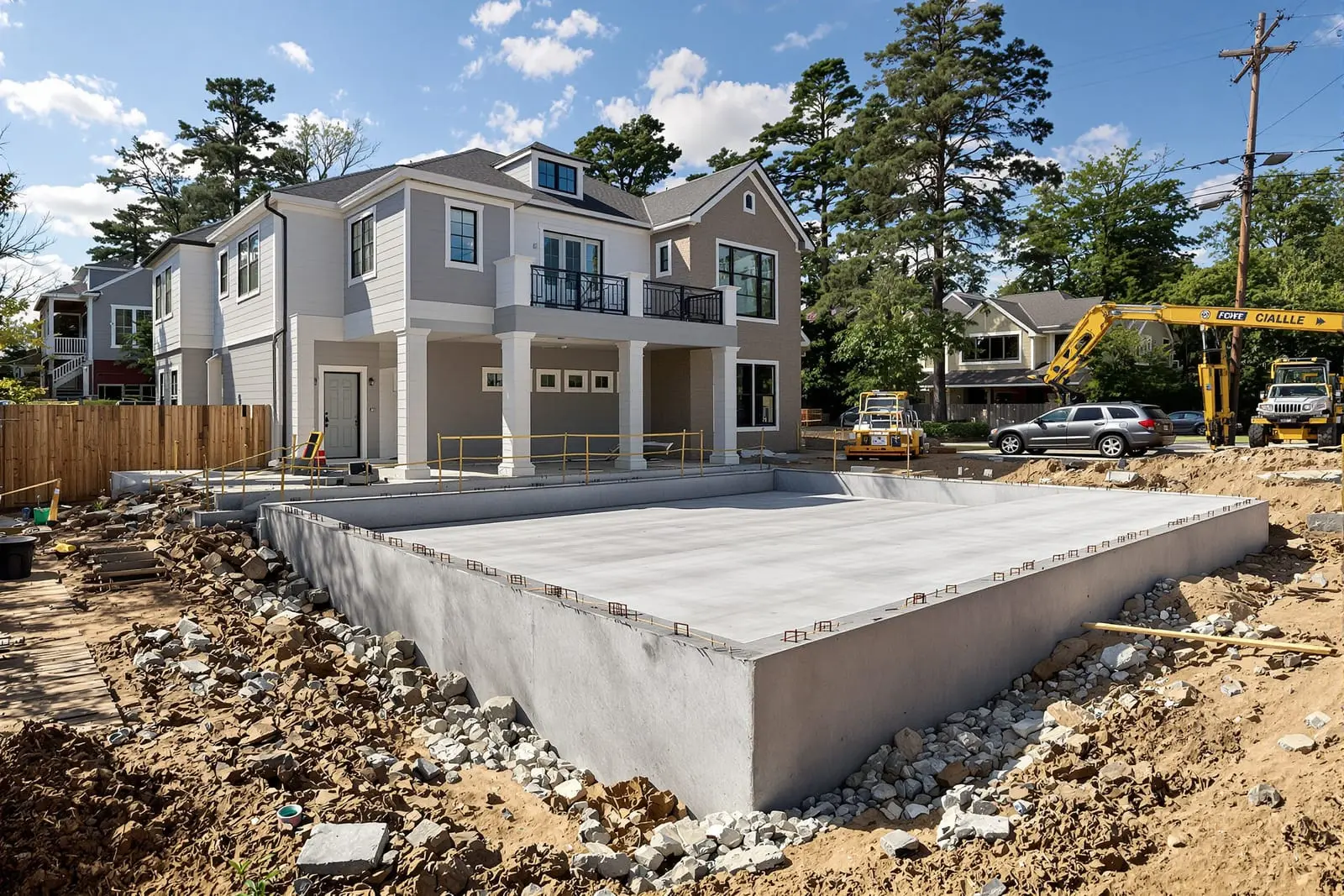
Our concrete structural and slab demolition services in Pittsburgh, PA tackle thick commercial slabs, pads, and structural concrete. We saw cut, break, and safely remove concrete from warehouses, plants, and parking areas. With the right equipment and hauling capacity, we keep concrete demolition projects on schedule and within budget.
Wrexo Demolition Pittsburgh provides professional concrete slab demolition throughout Pittsburgh, PA and the surrounding area. Our licensed, insured crew delivers safe, clean, on-time work with a free estimate before anything begins. Call (412) 618-0591 or request your free quote.
Concrete Slab Demolition in Pittsburgh, Done the Right Way
If you are staring at a cracked driveway, a heaving basement slab, or a crumbling loading dock, Wrexo Demolition Pittsburgh can break it out cleanly so you can rebuild without surprises. Our concrete slab demolition service is focused on doing the messy part with precision, so your next contractor starts on a solid, clean base.
In Pittsburgh, concrete behaves differently than in flat, warm climates. Freeze-thaw cycles, hillside movement, and older backfill materials all affect how a slab fails and how it needs to be removed. We look at what is under and around your concrete before we even start. That means checking for voids from washout, mapping utility lines, and looking for signs of structural settlement so we do not create new problems while removing the old slab.
Whether your project is a small patio in Brookline, a warehouse floor in the Strip District, or a parking pad in Dormont, we tailor the equipment and method to your specific site. You will get clear timing, a straightforward scope, and a path that keeps your property safe and ready for the next phase.
How We Actually Remove Concrete Slabs and Structural Concrete
Concrete slab demolition is not just smashing and hauling. At Wrexo Demolition Pittsburgh, we follow a process so we can predict how the slab will come apart and protect anything tied to it.
First, we perform a site assessment. We locate visible and known utilities, look for cleanouts, gas risers, water shutoffs, and any signs of buried electric or communication lines. In older Pittsburgh neighborhoods, we assume there may be unmarked utilities and adjust our methods, including hand exposure or vacuum excavation in sensitive areas.
Second, we identify the slab type. A basement slab on grade, a garage floor tied into block walls, a structural deck over a crawl space, and a reinforced industrial floor all behave differently. We check slab thickness, rebar or wire mesh, and whether it is doweled into foundation walls. This tells us if we can use concrete saws to create control lines, or if we need heavier equipment like a mini excavator with a breaker attachment.
Third, we cut and break in a controlled pattern. For residential driveways, patios, and walkways, we typically sawcut the slab into a grid, then use breakers to fracture it along those lines. In tight city lots and interior spaces, we may rely more on saws and smaller breakers so vibration stays low and nearby walls or steps are not damaged.
For structural concrete, like elevated slabs, thick footings, and concrete stair structures, we use staging that protects remaining supports, brace where needed, and dismantle in smaller sections. We often cut through reinforcing steel separately so surrounding materials are not torn apart. Debris is removed in stages so we can constantly see how the structure is reacting.
Finally, we sort and load out materials. Concrete, masonry, steel, and trash do not all go to the same place. We separate clean concrete so it can be sent to a local recycler, which often reduces disposal cost and environmental impact.
What Drives Cost for Concrete Slab Demolition in Pittsburgh
Customers often ask why two similar sized slabs have very different demolition costs. The square footage is only part of the story. Wrexo Demolition Pittsburgh walks you through the main cost drivers before we start, so your estimate makes sense.
Access is usually the biggest factor. If we can get a skid steer or mini excavator close to the slab, labor time drops. If your project is in a narrow South Side alley, up a steep Squirrel Hill driveway, or down tight basement stairs, we may have to use smaller equipment or hand demolition, which takes longer.
Thickness and reinforcement matter a lot. A 3 inch sidewalk with wire mesh breaks easily, but an 8 inch garage slab with rebar, or a heavily reinforced commercial floor, takes more time, more fuel, and more wear on tools. Structural elements like piers, grade beams, and machine pads are even more intensive because of the amount of steel and concrete involved.
Disposal and hauling are next. Pittsburgh has specific dump sites that accept concrete and masonry, and tipping fees change based on how clean the load is. If we can send mostly clean concrete to a recycler, you pay less than if the slab is glued to tile, mastic, or contaminated soil. Distance from your property to a suitable facility also affects the hauling cost.
Site conditions can shift pricing too. Working on a flat, open lot in Robinson is not the same as a sloped backyard in Mt. Washington with a 30 foot drop. We might need extra shoring, erosion control, or protective matting to keep equipment from ruts or from sliding. All of this is discussed up front so there are no hidden surprises later.
Finally, permitting and inspections can add time and administrative cost, especially for commercial sites and structural demolition tied into a building. We factor that into the schedule so your next trade is not stuck waiting on paperwork.
Permits, Safety, and Local Rules for Concrete Demolition
Concrete slab demolition in Pittsburgh often triggers city or township oversight, especially if the work is tied to a building or affects drainage. Wrexo Demolition Pittsburgh helps you sort out which rules apply so you are not fighting with code enforcement after the concrete is already gone.
Inside Pittsburgh city limits, permits may be required if you are removing structural concrete, such as a garage floor that is part of a retaining wall system, or a slab that supports load-bearing posts or columns. In some surrounding municipalities like Ross, Shaler, or Monroeville, even large driveway replacements may require a permit or at least a zoning review to confirm setbacks and stormwater requirements.
For structural concrete connected to a house or commercial building, we recommend involving your engineer or architect when there is any doubt about what is load bearing. We are happy to coordinate with your design professional, follow their drawings, and provide photos of key steps for their records.
Safety is handled in layers. We set up work zones, temporary barriers, and signage if the demolition is visible to the public. Dust control with water is standard, especially when working near neighbors or open windows. We use saws with water feeds, breakers with guards, and scheduled breaks to keep noise within reasonable hours that align with local ordinances and HOA rules.
Underground utilities are a major concern in older Pittsburgh neighborhoods where records can be incomplete. We encourage every customer to start with Pennsylvania One Call (811) for public utility locates. For private lines like electric feeds to garages, pool lines, or old sewer laterals, we can recommend private locating services or use careful probing and exposure around known paths before heavy demolition begins.
We also look at drainage and erosion. Once a slab is gone, water may travel differently across your property. For sloped or hillside sites, we can leave temporary grading or crushed stone in place, so your contractor is not fighting mud or washout when it is time to pour the new concrete.
Preparing for Your Project and What Happens After Demolition
A smooth concrete slab demolition project starts with a bit of planning on your side and careful cleanup on ours. Wrexo Demolition Pittsburgh gives you clear expectations for both, so you are not left guessing what comes next.
Before we arrive, we ask that you move vehicles, grills, furniture, and anything fragile away from the work area. If access runs along a neighbor’s fence or shared driveway, it is a good idea to give them a heads up. For interior slabs, like basement floors or utility rooms, we help you plan how to protect belongings from dust. Plastic sheeting, negative air machines on larger projects, and sealed doorways keep dust contained.
During demolition, a supervisor remains on site or on immediate call to adjust methods if we uncover surprises. In Pittsburgh, that might be an unrecorded brick cistern under a slab, a buried fieldstone foundation from an older structure, or an unexpected layer of slag used as fill. When we find conditions like these, we pause, explain what it means, and give you options for how to proceed.
Once the concrete and related debris are removed, we address the subgrade. For many projects, especially where a new slab will be poured, we rough grade and compact the base. This helps your concrete contractor start quickly and reduces the risk of future settlement. If the subgrade is disturbed or unsuitable, we can bring in compactable stone and leave you with a stable, well-drained base.
We also perform a final walk-through with you. We confirm that all agreed areas of slab and structural concrete are removed, check that utilities are visible or safely buried as planned, and review any recommendations for the next trade. If requested, we can provide photographs of the subgrade and any structural tie-ins we exposed, which is helpful documentation for engineers, insurers, or city inspectors.
When we leave, the goal is simple. The noisy, heavy, and risky part of the project is done, the site is safe, and your next contractor can focus on building instead of fixing demolition mistakes.
“
Professional concrete structural and slab demolition, done right the first time, quality materials, honest pricing, and results that last.
Wrexo Demolition Pittsburgh
Concrete Structural and Slab Demolition Across Our Service Area