Home › Mobile Home and Manufactured Home Demolition
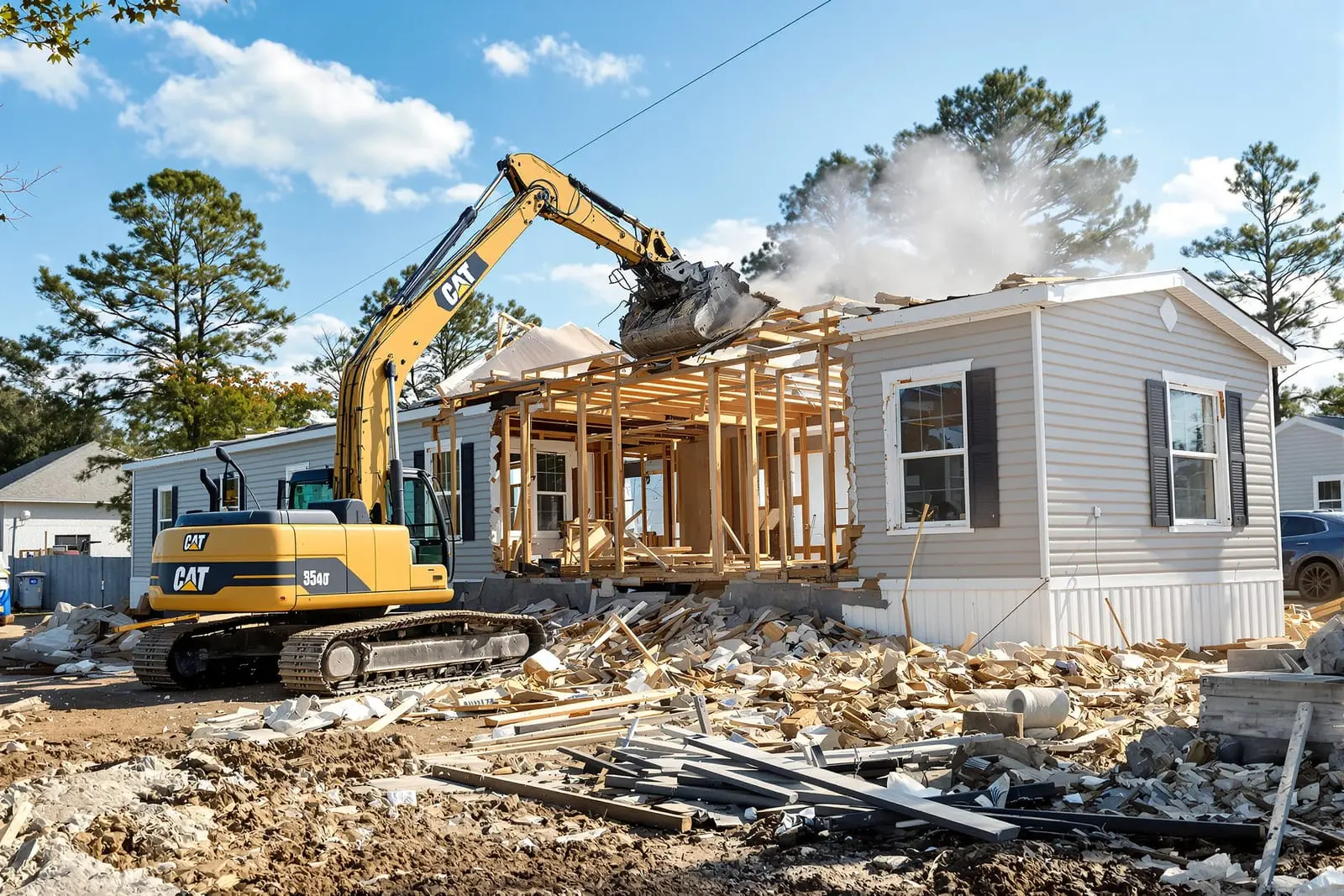
We offer mobile home demolition in Pittsburgh, PA for outdated or abandoned manufactured homes and trailers. Our team separates utilities, dismantles or crushes the structure, and hauls away all materials. Your pad or lot is left clean and graded for a new unit or a different use.
Wrexo Demolition Pittsburgh provides professional mobile home demolition throughout Pittsburgh, PA and the surrounding area. Our licensed, insured crew delivers safe, clean, on-time work with a free estimate before anything begins. Call (412) 618-0591 or request your free quote.
Mobile Home Demolition in Pittsburgh With a Neighborhood Mindset
Mobile and manufactured homes are built differently than traditional houses, so tearing them down safely takes a specific process and the right equipment. Wrexo Demolition Pittsburgh focuses on mobile home demolition projects across Allegheny County and surrounding areas, from older single-wides in small parks to double-wides on private land.
We understand the real-world situations that lead to these projects in Pittsburgh. Maybe an older trailer in West Mifflin is no longer up to code, a manufactured home in Penn Hills was damaged beyond repair by a tree, or you are clearing a mobile home from a lot in McKees Rocks to build a new stick-built house. Our team looks at the condition of the home, access for equipment, nearby neighbors, and utility lines before we even bring a machine on site.
Because we are local, we are familiar with tight hillsides, narrow city streets, and soft yards in the spring. That experience shapes how we stage our equipment, protect surrounding property, and schedule your job around weather and ground conditions that are common in the Pittsburgh area.
How Mobile Home Demolition Actually Works
Mobile home demolition usually follows a clear sequence, adjusted for your specific property.
1) Site visit and documentation. We start with a walk-through of the home and the lot. We look for structural weaknesses, additions that were built onto the trailer, decks, porches, tie-down systems, skirting, and any sheds or small garages that might tie into the same project. Photos and measurements help us plan disposal and equipment access.
2) Utility locating and shutoff. Before any touch of demolition, we confirm all utilities are fully disconnected and capped. For Pittsburgh and nearby municipalities, that means coordinating with Duquesne Light, Peoples Gas, and local water and sewer authorities. We verify power meters are pulled, propane tanks are removed, and any septic systems are clearly marked.
3) Salvage and hazardous material check. Older mobile and manufactured homes may contain asbestos in flooring, siding, or roof coatings. We identify suspect materials, arrange testing when appropriate, and either adjust the demolition method or have those sections removed separately in line with Pennsylvania regulations.
4) Structural takedown. For most mobile homes, we use an excavator with a grapple or thumb to peel off the roof first, then crush and fold walls inward. On double-wides that were joined on-site, we often separate the seam first, then process each side. In tighter city lots, we may use smaller machines or partial hand demo to avoid damage to neighboring structures.
5) Debris sorting and loading. Metal framing, axles, and steel skirting are separated and recycled. Clean wood and non-recyclable mixed debris are loaded into trucks or roll-off containers for transport to approved facilities that accept this material from the Pittsburgh region.
6) Final site work. Once the mobile home is gone, we remove piers and block supports, pull or crush concrete pads if part of the contract, and rough grade the area so it is ready for fill, grass, or new construction.
Cost Factors for Mobile Home Demolition in Pittsburgh
There is no single price that fits every mobile home demolition, because several elements specific to your property drive cost.
Size and type of home. A small, 1960s single-wide on pier blocks will cost less to remove than a large modern double-wide with a heavy roof system and attached decks. Length, width, and height all affect debris volume and machine time.
Site access and terrain. Many local mobile homes sit on slopes in areas like Baldwin or on tight city lots in neighborhoods like Beechview. If we cannot back equipment directly to the home, or if we need smaller machinery because of power lines or neighboring buildings, the work takes longer and may require more labor.
Additions and extras. Porches, stick-built rooms, carports, garages, and block foundations all change the scope. Some owners choose to remove only the mobile home and keep existing slabs or utility hookups for a new structure. Others want a complete clearing. We separate these line items in the estimate so you can decide.
Hazard and material conditions. Presence of asbestos, heavy mold, fire damage, or unsafe structural failure can alter how we approach the job. For example, a fire-damaged manufactured home in McKees Rocks might require more piece-by-piece handling and dust control than a structurally sound but outdated unit.
Disposal distance and requirements. Pittsburgh sits within reach of several disposal and recycling facilities, but mileage, weight limits, and material types all influence hauling costs. Because we run these routes daily, Wrexo Demolition Pittsburgh can typically choose the most cost-efficient and compliant disposal option and pass that efficiency on to you.
Permits and inspections. Some municipalities in Allegheny County require separate demolition permits for mobile homes, while others treat them like removal of a temporary structure. We clarify what your local code office requires up front so there are no surprises or delays.
Permits, Codes, and Utility Coordination Around Allegheny County
Mobile home demolition often intersects with zoning and code enforcement, especially when the structure is on a permanent foundation or part of a mobile home park.
Municipal approvals. In the City of Pittsburgh and many surrounding boroughs, a demolition permit is required if the mobile or manufactured home has been assessed as real property or sits on a fixed foundation. Wrexo Demolition Pittsburgh helps gather the information the municipality needs, such as property owner authorization, site plan sketches, and proof of utility shutoffs.
Park management coordination. When the home is in a mobile home park, we coordinate with park management about work hours, traffic flow, and protection of shared utilities like water lines that may run close to multiple units. This avoids service interruptions for your neighbors and keeps relations in the community positive.
Environmental rules. Pennsylvania requires proper handling of materials that may contain asbestos or other regulated components. If your mobile home falls in an age range where those materials are common, we explain what testing or abatement might be needed and schedule that work before mechanical demolition begins.
Utility companies. We routinely work with Duquesne Light, Peoples Gas, and local water and sewer providers throughout Allegheny, Beaver, Washington, and Westmoreland counties. Knowing their processes and lead times helps us sequence your project efficiently so you are not left waiting weeks between shutoff and demolition.
Handling Common Challenges in Local Mobile Home Projects
Mobile and manufactured home demolition in the Pittsburgh area often comes with practical challenges that a generic contractor might overlook.
Tight access and steep grades. Many hillside lots around the city and river valleys do not have level driveways or large open yards. We use a combination of compact excavators, tracked skid steers, and careful staging of roll-off containers in the street or at the top of a drive to keep the project safe and within local parking and traffic rules.
Neighbor proximity and park rules. In mobile home communities, units can be only a few feet apart. We set up controlled collapse methods, taking the home down in small sections rather than all at once. We also plan noisy work for hours that are least disruptive, and we keep communication clear with residents who may be watching this work from their front steps.
Weather and soil conditions. Western Pennsylvania weather can quickly turn a yard into mud. To avoid rutting lawns or getting equipment stuck, we may use timber mats or crushed stone to create stable paths, or we may adjust the schedule slightly if a major storm is moving through. Our goal is to leave the surrounding property as undisturbed as reasonably possible.
Mixed ownership of improvements. Many mobile homes have decks, awnings, and sheds that were added by previous owners, sometimes with little documentation. During our initial visit, we help you identify which structures you want removed and which you want left intact. We then write that into the contract clearly so both sides know exactly what will be demolished.
Preparing Your Mobile Home for Demolition
There are a few key steps property owners can take before demolition day to save time and reduce cost.
Personal contents and loose items. All personal belongings, furniture, and loose items should be removed from the mobile home unless you have arranged a different plan with us in writing. Clearing these items ahead of time means we can move directly into structural teardown rather than spending demolition hours sorting household debris.
Hazardous and special waste. Items like paint cans, automotive fluids, old propane tanks, and certain appliances require separate disposal or recycling. If we find these on site, we will need to stage and remove them separately, which can affect cost. We can provide guidance on local drop-off locations around Pittsburgh for many of these items.
Access and parking. If street parking is usually tight in your neighborhood, arranging for extra space on demolition day helps our trucks and equipment get in and out safely. In city neighborhoods, you may want to notify neighbors a few days in advance that a mobile home demolition will be taking place.
Future site plans. Let us know if you intend to place a new manufactured home, pour a garage slab, or build a traditional house on the same spot. That information will guide how we handle foundations, piers, concrete pads, and grading so you do not pay twice for similar work.
Why Work With Wrexo Demolition Pittsburgh for Mobile Home Removal
Choosing a demolition contractor for a mobile or manufactured home is not only about the lowest quote. Because these structures involve utilities, nearby neighbors, and often future building plans, you need someone who understands the full picture.
Wrexo Demolition Pittsburgh is focused on right-sized solutions. If your project is a simple single-wide removal in a rural part of Washington County, we do not overcomplicate it. If it is a complex double-wide attached to a stick-built addition in a busy Pittsburgh neighborhood, we break the work into clear phases and keep you informed at each step.
We own and maintain the equipment needed for this specific type of demolition, from grapples sized for lighter mobile home framing to trucks that can handle long but relatively light loads of siding and insulation. Our crews are local, used to navigating Pittsburgh traffic patterns, steep streets, winter conditions, and local code expectations.
Most importantly, we try to leave every site in a condition that suits your next step, not just our last step. Whether your goal is a clean open lot, a graded pad ready for a new manufactured home, or a fully cleared site ready for a new build, we tailor our demolition plan so the end result lines up with your plans for the property.
“
Professional mobile home and manufactured home demolition, done right the first time, quality materials, honest pricing, and results that last.
Wrexo Demolition Pittsburgh
Mobile Home and Manufactured Home Demolition Across Our Service Area