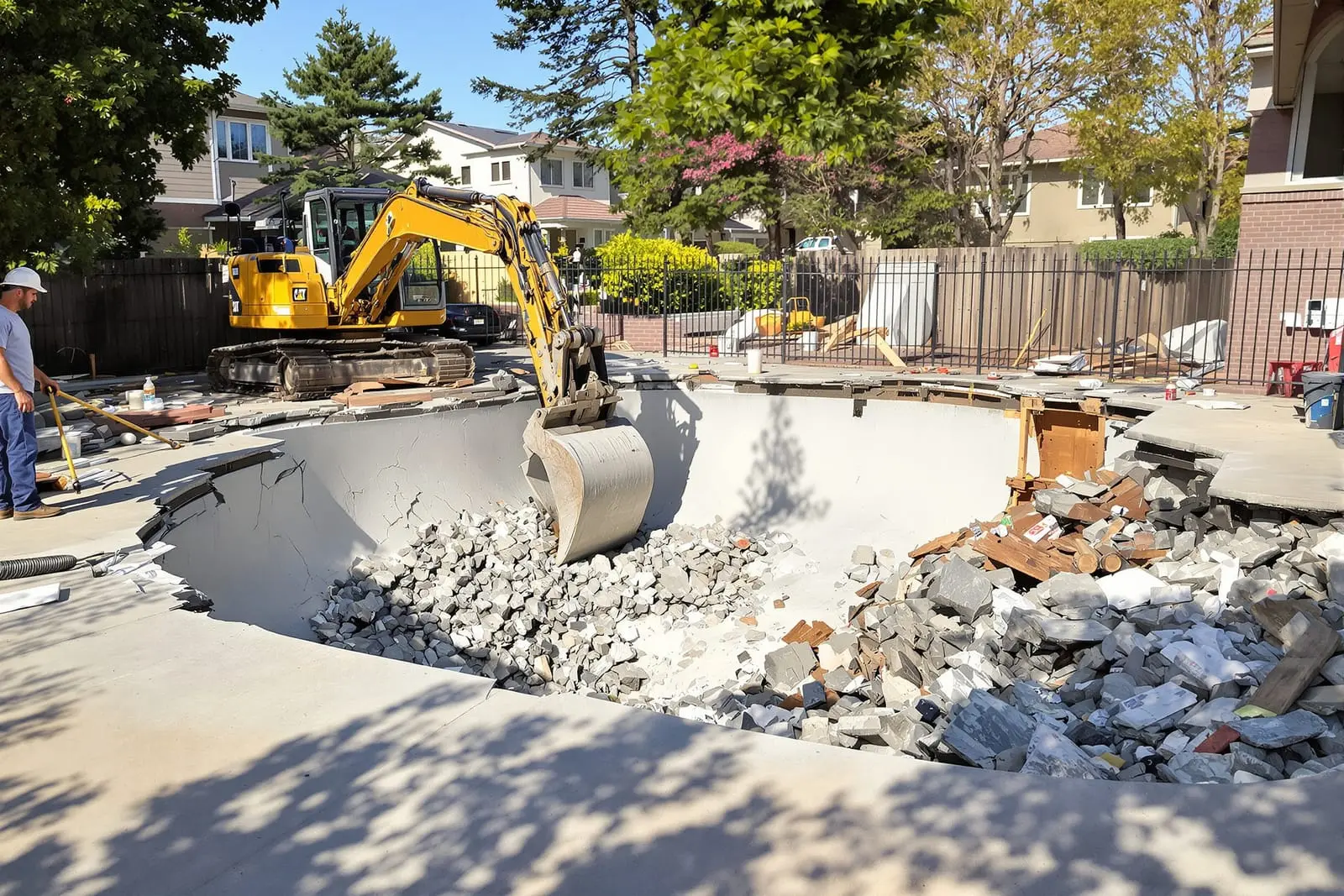
We handle complete swimming pool demolition in Pittsburgh, PA for concrete, vinyl, and fiberglass pools. Our crew breaks up shells, removes equipment, backfills with proper material, and restores grading. Whether you want more yard space or to eliminate maintenance, we provide a lasting solution.
Wrexo Demolition Pittsburgh provides professional swimming pool demolition throughout Pittsburgh, PA and the surrounding area. Our licensed, insured crew delivers safe, clean, on-time work with a free estimate before anything begins. Call (412) 618-0591 or request your free quote.
Specialized Swimming Pool Demolition in Pittsburgh
Wrexo Demolition Pittsburgh provides precise, code-compliant swimming pool and spa demolition for homeowners across the Pittsburgh area. Our team focuses on removing aging or unsafe pools in a way that protects your property, respects your neighbors, and sets up the site for whatever you want to do next, such as a lawn, patio, addition, or new pool.
Pools in Western Pennsylvania face freeze-thaw cycles that quickly break down concrete, coping, and plumbing. Cracked shells, heaving decks, and leaking lines are common reasons our clients choose removal instead of another costly repair. We evaluate the structure, access, and soil conditions specific to your neighborhood and then match the method to the conditions on your lot instead of using a one-size-fits-all approach.
We handle full removals of in-ground concrete and vinyl liner pools, fiberglass shells, older gunite spas, and raised or built-in hot tubs. Whether your pool is tucked into a narrow city yard in Lawrenceville or on a sloped lot in Mt. Lebanon, we adjust equipment, haul routes, and staging so the work is efficient and safe.
How Our Pool and Spa Demolition Process Works
Every swimming pool demolition project with Wrexo Demolition Pittsburgh starts with a site visit. We measure the pool, inspect the shell and deck, check access points for machinery, and identify utilities that may run near or under the pool. This allows us to determine whether partial removal or full removal is appropriate and to produce an accurate written scope and cost.
On demolition day, we first shut off and disconnect electrical, gas, and water serving the pool or spa. This includes capping gas lines for heaters, terminating dedicated pool subpanels, and making sure bonding wires are handled correctly. If you prefer, we can coordinate with your electrician or plumber, but many homeowners have us manage it end to end.
Next, we drain the pool in a controlled manner. Instead of just pulling a plug, we route discharge to an approved location, often the sanitary sewer cleanout where allowed or a controlled discharge that does not flood neighboring yards. If the water is heavily chlorinated or has algaecides, we may require a short neutralization period before discharge.
Once dry, we use excavators, breakers, and saws to open the shell. For concrete and gunite pools, we break large sections into manageable pieces. For fiberglass shells, we typically cut or saw the shell into sections before lifting them out with a machine. Vinyl liner pools require removal of the liner, coping, and metal or polymer walls before addressing the floor. Throughout this phase we control dust and debris and maintain clear haul routes to avoid damaging walkways and driveways.
Partial vs Full Pool Removal and Backfill Details
Pittsburgh municipalities and lenders treat partial and full pool removals differently, so Wrexo Demolition Pittsburgh explains both options clearly before you commit.
Partial removal typically involves punching drainage holes in the pool bottom, breaking the upper 18 to 24 inches of the side walls, and folding debris into the deep end. We then backfill in compacted lifts above that debris. This is often the lower-cost choice and works for many homeowners who simply want a safe, usable yard. However, some future buyers, appraisers, or building departments may still consider it a pool structure below grade, which can matter if you plan additions or new foundations over the area.
Full removal involves taking out the entire shell, including the floor. For concrete, that means breaking and hauling away almost all material to an approved recycling or disposal site. For fiberglass pools, we typically remove the shell in large pieces and truck it off-site. The hole is then backfilled with clean structural fill such as compactable soil or a mix of crushed concrete and soil, followed by topsoil for the final surface. Full removals usually cost more but give you maximum flexibility for future structures, sometimes simplify resale, and reduce the risk of long-term settlement.
For both methods, we compact in lifts, commonly 8 to 12 inches at a time, using plate compactors or trench rollers. This step is critical in our region’s clay-heavy soils, which expand and contract through wet springs and freezing winters. Proper compaction greatly reduces the chance of future dips or soft spots in your lawn, patio, or play area.
Cost Factors for Swimming Pool Demolition in Pittsburgh
Wrexo Demolition Pittsburgh prices swimming pool demolition based on measurable site conditions, not rough averages taken from other markets. Several key factors influence the cost of your project.
Pool type and size are primary drivers. Thick gunite shells and reinforced concrete with integrated spas and waterfalls take more time and heavier equipment than a modest vinyl liner pool. Fiberglass removals tend to fall in the middle, with more focus on careful cutting and lifting.
Access is also a major variable. A yard that allows standard skid steers or excavators to drive directly to the pool is more economical than a fenced-in city lot where machinery must be smaller and trips to the street are longer. Sometimes a single tree, narrow gate, or steep driveway in neighborhoods like Squirrel Hill or Dormont noticeably changes the labor and equipment needs.
Site restoration choices affect cost as well. Some owners want a basic rough grade that they will landscape later, while others request finished topsoil, seed, and straw blankets. If you plan to build a garage, addition, or hardscape over the area, we may recommend additional compaction or engineered fill, which we detail in the estimate.
Season and scheduling play a smaller but real role. Frozen ground in mid-winter can slow excavation, while saturated clay in early spring can limit equipment movement and require more careful backfill management. When possible, we work with you to pick a window that balances your timeline and the soil conditions on your property.
Managing Utilities, Permits, and Local Regulations
Properly handling utilities and permits is critical in any swimming pool demolition in Allegheny County. Wrexo Demolition Pittsburgh obtains a Pennsylvania One Call utility locate before excavation, regardless of how obvious the lines appear. This locate identifies gas, electric, water, sewer, and some communication lines that might run near the pool or through the yard.
We cap or disconnect gas lines to pool heaters at an accessible location and coordinate with your gas provider when their involvement is required. Electrical feeds to pumps, lighting, and heaters must be safely terminated in accordance with code, not simply abandoned underground. If needed, we bring in a licensed electrician who understands pool bonding and older Pittsburgh electrical systems.
Many municipalities around Pittsburgh require a demolition or fill permit for in-ground pools. Permanent removal sometimes calls for documentation of the fill material and compaction method. We stay familiar with local requirements in areas like Pittsburgh city proper, Ross Township, Shaler, and Upper St. Clair, and we can guide you through any homeowner responsibilities for permit applications.
If your property is near a slope, storm sewer, or stream, we pay close attention to erosion control. Simple measures like silt fence, straw wattles, or staged backfilling protect neighboring properties and keep you in compliance with local stormwater regulations.
Handling Common Challenges on Pittsburgh Pool Sites
Older pools in Pittsburgh neighborhoods frequently come with surprises, and experienced planning is what keeps those surprises from turning into change orders and delays. At Wrexo Demolition Pittsburgh, we systematically look for the issues that tend to appear on local pool demolitions.
One recurring challenge is unstable fill around the original pool installation. Many pools were built by cutting a hole, dropping in the structure, and loosely backfilling with whatever soil or rubble was on hand. Over decades, that material settles or retains water. When demolishing, we evaluate how much of that side fill needs to be removed or blended and re-compacted to provide a solid base for your future lawn or hardscape.
Unexpected groundwater is another factor. Certain parts of the region, especially in valleys or on hillsides, can have seasonal springs. When we open the pool bottom, we sometimes encounter water entering from below. In those cases, we use sump pumps and may add a basic underdrain layer of stone to move water away from the new fill so it does not stay saturated.
Tight urban lots also demand careful logistics. In some city neighborhoods, access may require protecting sidewalks with steel plates, posting temporary no-parking signs, or arranging specific haul times to avoid school buses. We plan truck routes that minimize disruption and, where practical, schedule noisy operations within allowable daytime hours.
Finally, we pay attention to your existing improvements. Fences, sheds, retaining walls, and nearby patios can usually be kept intact if the project is staged correctly. We often protect concrete and paver patios with plywood or mats and choose attachment sizes that allow us to work close to structures without unneeded damage.
What to Expect Before, During, and After Your Pool Removal
When you contact Wrexo Demolition Pittsburgh about swimming pool demolition, we start with a conversation about why you want the pool gone and what you hope to do with the space. That end goal helps us propose the right type of removal and the right level of finish grading for your property.
Before work begins, you will receive a written proposal that spells out the removal method, what materials will be hauled away, what will be left in place, how backfilling and compaction will be handled, and how the site will look when we are finished. You will know whether fences will be temporarily removed, where equipment will enter, and approximately how many days the work will take.
During demolition, a site lead is available to answer questions and explain progress. You will see a clear sequence: utility shutoff and verification, draining, structural demolition, debris removal or redistribution (depending on the chosen method), then backfill and grading. We keep the site as orderly as possible and clean up streets and driveways daily if tracking occurs.
After backfill and grading, we walk the site with you. Any agreed seeding, straw, or stabilization will be completed. We can provide basic information for your records on what was removed and how it was filled, which can be useful for future projects or when selling your home. If you later notice minor settlement, which can occur in the first few freeze-thaw cycles, we can advise on simple topdressing or, in rare cases, targeted rework.
Our goal is that six months after we leave, the only sign a pool was ever there is the flat, usable yard you now enjoy.
“
Professional swimming pool and spa demolition, done right the first time, quality materials, honest pricing, and results that last.
Wrexo Demolition Pittsburgh
Swimming Pool and Spa Demolition Across Our Service Area