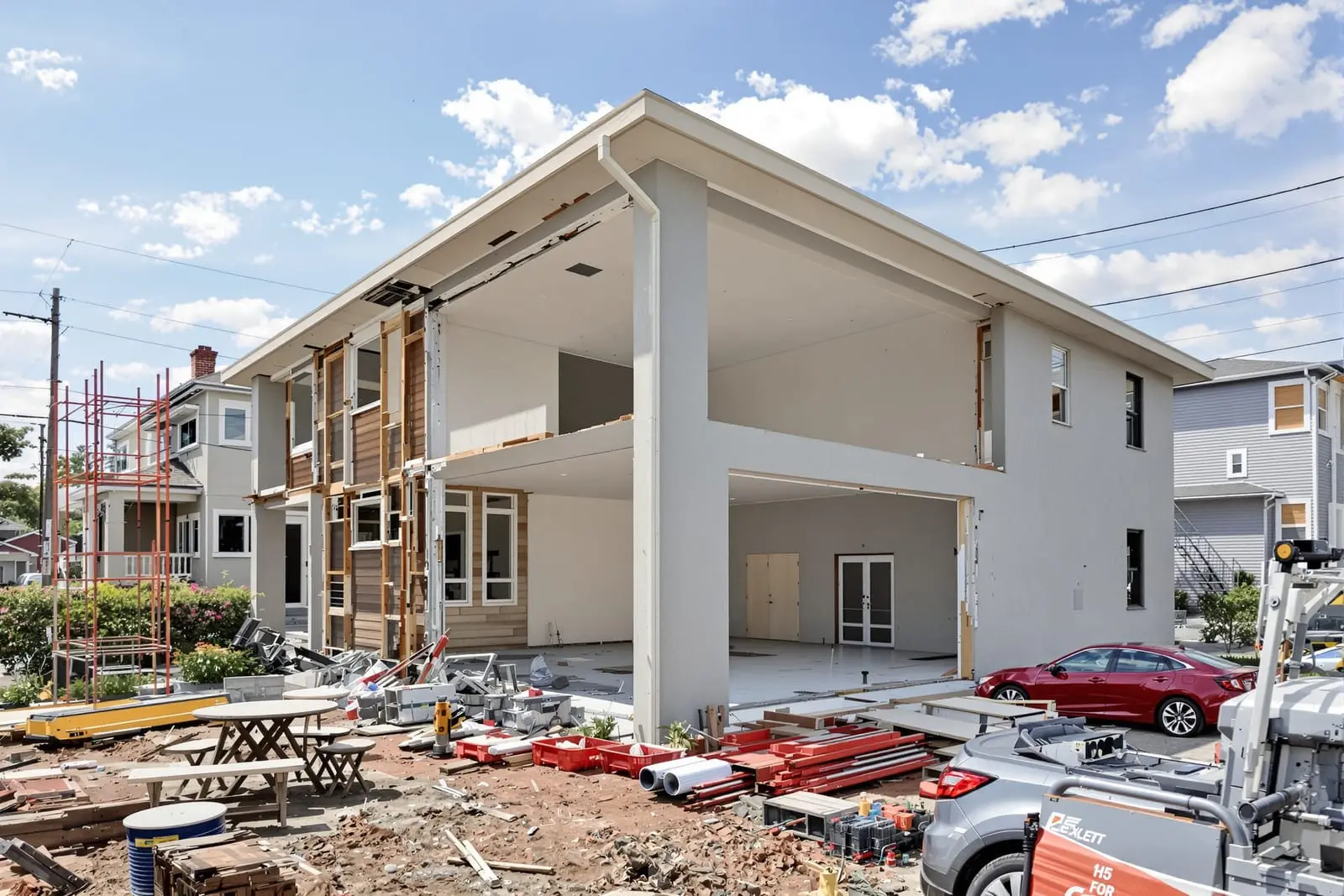
Our office and business space demolition services in Pittsburgh, PA help property managers and tenants reconfigure or refresh workspaces. We remove partitions, ceilings, flooring, built ins, and data cabling while protecting elevators and common areas. Efficient scheduling and debris handling minimize downtime for your business or building.
Wrexo Demolition Pittsburgh provides professional office demolition throughout Pittsburgh, PA and the surrounding area. Our licensed, insured crew delivers safe, clean, on-time work with a free estimate before anything begins. Call (412) 618-0591 or request your free quote.
Office Demolition in Pittsburgh That Fits Your Building and Your Business
Office and business space demolition in Pittsburgh is rarely one-size-fits-all. Wrexo Demolition Pittsburgh starts every project by walking the space with you and the building manager so we understand the building’s age, structure, and current use. A 1970s brick mid-rise on Liberty Avenue needs a different approach than a tech office in a converted Strip District warehouse or a medical suite in an Oakland high-rise.
We look closely at what is staying and what must come out: walls, flooring, ceilings, built-in casework, cubicles, server rooms, and mechanical rooms. We identify structural walls versus partitions, locate risers and vertical shafts, and confirm where shared utilities run to neighboring suites. This early detail work is what keeps tenants on other floors operating safely while your space is being demolished.
Our goal is to prepare the space for your build-out crew with clean, clearly defined conditions that match your architect’s demolition plans and your landlord’s requirements. That means no half-cut conduits left in walls, no mystery wires above the ceiling grid, and a floor slab that is ready for the next trade to start on schedule.
How the Office Demolition Process Works From First Call to Turnover
When you call Wrexo Demolition Pittsburgh about office demolition, we begin with a short phone consult and then a site visit, usually within a few days. We review your lease obligations, your construction drawings if available, and any building rules from property management. If you do not have plans yet, we can work directly from a scope list and walk-through notes.
Next, we coordinate with your GC or landlord to confirm what is “by tenant” and what is “by building.” For example, you may be responsible for removing interior partitions and flooring, while the landlord retains and protects HVAC trunk lines or base building fire sprinklers. We document this clearly so there are no surprises later.
Once scope is locked, we produce a written proposal that spells out which items will be removed, which will be capped or made safe, how debris will be handled, and how long the work should take. For multi-tenant buildings in Downtown, Oakland, or Station Square, we schedule noisy work for off-hours if the building requires it and arrange elevator reservations for hauling debris.
During demolition, a working foreman is on site to coordinate with building security and other trades. At the end, we do a joint walk-through with you or your GC and the building representative so everyone agrees that demolition is complete and compliant with the lease or work letter.
Selective Interior Demolition That Protects What Matters
Most office demolition in Pittsburgh is selective interior demolition, not total gutting. Wrexo Demolition Pittsburgh focuses on removing only what needs to go, while protecting the systems and finishes that you or the landlord want to keep.
Common selective tasks include taking out non-load-bearing walls, glass partitions, reception desks, millwork, break rooms, built-in filing systems, and old data cabling. We often demo suspended acoustic ceilings so that MEP trades can access the plenum. We remove flooring such as carpet tile, glue-down carpet, VCT, laminate, and some tile finishes, as well as adhesive and leveling compounds when required for the new flooring system.
We protect elevators, lobbies, and shared corridors with temporary wall systems, ram board, and floor protection. In historic or character buildings in the Strip District, Lawrenceville, or the North Side, we can carefully remove later additions so that the original brick, timber, or concrete can be exposed for your new open office design.
Typical tools and methods include saw-cutting for clean wall terminations, HEPA-filtered vacuums to reduce dust, and precise hand demolition around active systems. This approach reduces the risk of damaging base building systems and keeps the rest of the property operating while interior changes happen.
What Drives the Cost of Office Demolition in Pittsburgh
Office demolition costs in Pittsburgh vary based on several specific factors, not just square footage. Wrexo Demolition Pittsburgh explains these drivers upfront so you can budget accurately and compare bids fairly.
Access is a major cost factor. A third-floor space in a building with a small passenger elevator or limited loading area (common in older Downtown and South Side buildings) typically costs more to demolish than a first-floor suite with direct dock access. We plan debris routes and staging so we can work efficiently within building rules.
The type and quantity of finishes also matter. Removing multiple layers of old flooring, ceramic tile on mortar beds, or heavy millwork requires more labor and disposal. Demolishing demountable partitions is usually cheaper than cutting out metal-stud drywall partitions, especially if those walls have multiple layers of sheetrock or sound-insulation.
Systems complexity influences price. If your office has dense data cabling, supplemental HVAC for server rooms, or substantial glass storefront systems, dismantling and making them safe costs more than removing simple partitions. Working around active tenants, strict noise limits, or overnight-only access can also add labor hours.
Disposal and recycling fees are another component. Landfill tipping fees, metal recycling credits, and any special handling (such as if suspect materials require testing before removal) are built into the price so you are not hit with unexplained extras later.
Permits, Codes, and Safety for Office Demolition in Pittsburgh
For many interior office demolition projects within existing tenant spaces, the City of Pittsburgh may not require a full building permit if you are not altering structural elements or life-safety systems. However, high-rise and larger office renovations often do require a building permit and sometimes separate electrical or mechanical permits. Wrexo Demolition Pittsburgh coordinates with your general contractor and design team so work does not begin until required permits are in place.
We are familiar with typical requirements from the City of Pittsburgh Department of Permits, Licenses, and Inspections (PLI) and with fire code concerns in multi-story office buildings. When fire sprinklers, alarms, or smoke walls are near the demo area, we coordinate with the fire protection contractor and building engineer so systems remain active or are properly impaired and restored.
Safety is handled with site-specific plans. In occupied buildings, we set up clear barriers and signage so other tenants and visitors stay out of the work area. Dust control may include plastic walls, negative air machines, and regular sweeping and HEPA vacuuming, especially in medical or lab settings around Oakland and the North Side where cleanliness is critical.
If suspect materials such as old floor tile, pipe insulation, or plaster are present, we can refer you to local environmental testing and abatement firms. We do not disturb materials that may contain asbestos or lead until they are properly tested and remediated according to Pennsylvania and Allegheny County regulations.
Common Office Demolition Challenges and How We Handle Them
Office and business space demolition projects often reveal hidden conditions that were not visible during the initial walk-through. Wrexo Demolition Pittsburgh plans for these realities so problems do not derail your schedule.
One common issue is discovering unmarked electrical feeds or old data cables still tied into shared panels. Our crews treat unknown wires as live until a licensed electrician confirms otherwise. We pull back ceiling tiles carefully, identify feeders, and coordinate shutdowns or rerouting when needed.
Another challenge is sound and vibration in buildings with sensitive tenants, such as law firms, medical practices, or financial institutions. In these cases we schedule the loudest tasks, like concrete slab cutting or heavy wall removal, for early mornings, evenings, or weekends, as allowed by the building. We use hand tools and low-vibration methods where feasible to reduce disturbance.
Unexpected structural elements may appear inside partitions, such as hidden columns or shear walls that cannot be removed. When we find these, we stop work in that exact area, notify your design team and landlord, and adjust the demolition limits so that the building’s structural integrity is never compromised.
Finally, tight schedules at lease turnover are common in Pittsburgh’s busier office corridors. We help by phasing work, bringing in additional crew when needed, and prioritizing areas that your follow-on trades must access first so your overall project remains on track even if surprises arise.
What to Do Before You Schedule Office Demolition
A little preparation before demolition can save significant time and cost. Wrexo Demolition Pittsburgh encourages office tenants and owners to take a few specific steps before we start.
First, gather any existing floor plans, past renovation drawings, or landlord work letters. Even older drawings help us anticipate wall construction, slab conditions, and mechanical layouts. Share any lease language that describes how the space must be returned at move-out, such as removal of interior partitions or restoration to a “warm shell” condition.
Second, decide what must be salvaged or relocated. This might include doors and frames that match the rest of the floor, specialty lighting, IT racks, or built-ins that will be reused in another suite. We label and set aside these items so they do not get mixed with debris.
Third, coordinate with your IT provider to decommission and back up server rooms, phone systems, and network cabling. We can remove cable and racks after your team confirms that systems are offline.
Finally, talk with your neighbors and building management about timing. While we will follow building rules, your own outreach helps maintain good relationships with nearby tenants. Once these pieces are in place, we schedule mobilization, arrange building access, and set clear start and completion dates so your office demolition in Pittsburgh feeds smoothly into the next phase of your project.
“
Professional office and business space demolition, done right the first time, quality materials, honest pricing, and results that last.
Wrexo Demolition Pittsburgh
Office and Business Space Demolition Across Our Service Area