Home › Warehouse and Industrial Facility Demolition
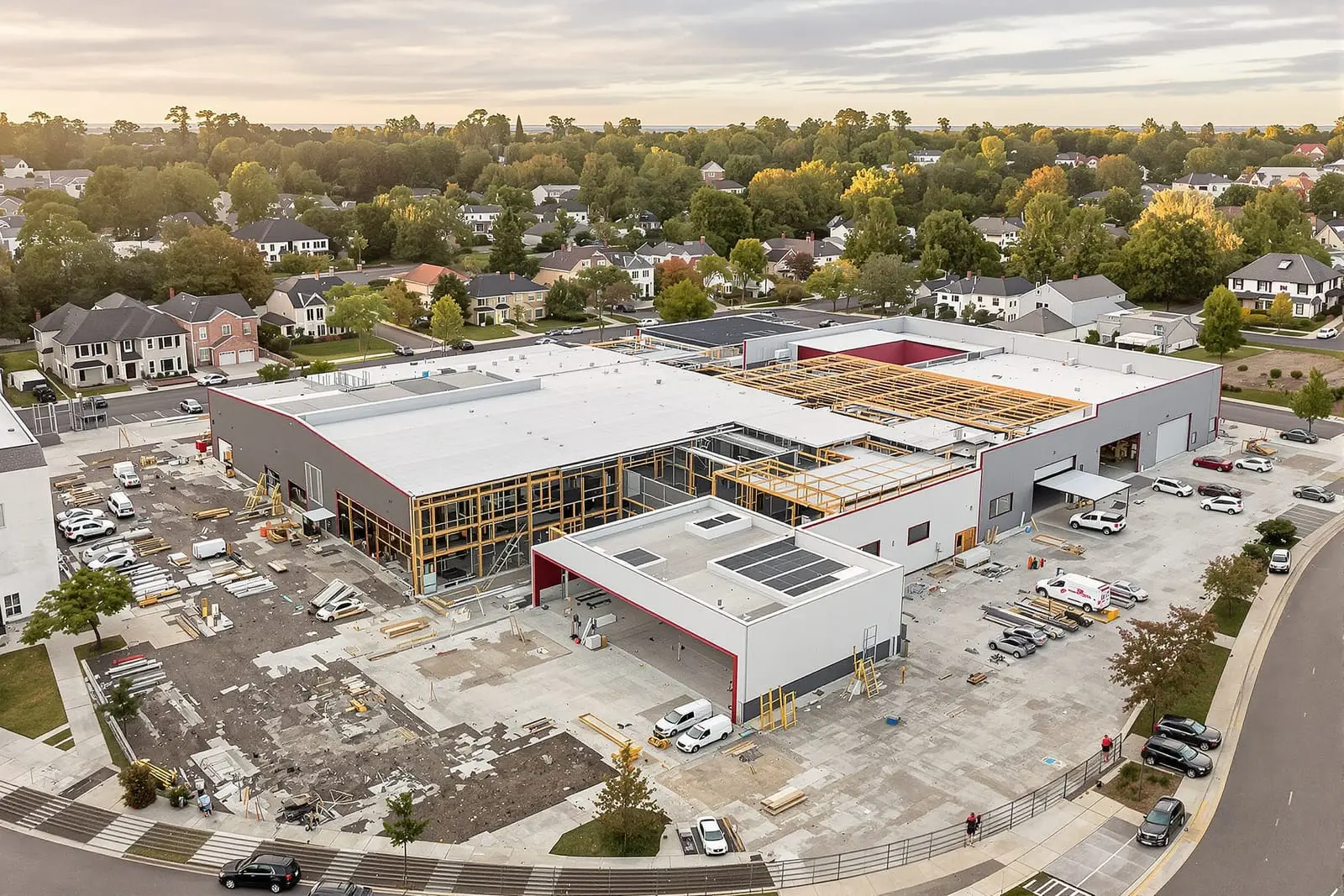
We handle warehouse and industrial facility demolition in Pittsburgh, PA from small distribution centers to heavy manufacturing plants. Our crews remove equipment, mezzanines, and structures while managing utilities and environmental requirements. With specialized machinery and safety protocols, we complete complex industrial demolitions efficiently.
Wrexo Demolition Pittsburgh provides professional warehouse demolition throughout Pittsburgh, PA and the surrounding area. Our licensed, insured crew delivers safe, clean, on-time work with a free estimate before anything begins. Call (412) 618-0591 or request your free quote.
Warehouse & Industrial Demolition in Pittsburgh Done the Right Way
Warehouse demolition in Pittsburgh is rarely simple. Older industrial buildings in this region often mix concrete, steel, brick, and sometimes heavy timber, with additions tacked on over decades. Wrexo Demolition Pittsburgh starts every warehouse and industrial facility demolition project with a detailed site walk, not just a quick estimate off photos.
We look at the frame type (steel, CMU block, reinforced concrete, or hybrid), slab thickness, column spacing, and roof system. We note loading docks, mezzanines, overhead cranes, conveyors, racking, and any pits or trenches in production areas. This tells us what equipment will be needed and how the structure wants to come down safely.
Pittsburgh zoning and site constraints also drive how we plan the job. Many older warehouses in Lawrenceville, the Strip District, the North Side, and along the rivers sit close to neighboring properties, public roads, or active rail lines. In those tight areas we use high-reach excavators with concrete processors and shears for controlled, piece-by-piece takedown instead of just pushing structures over. In more open industrial parks around Robinson, Cranberry, and West Mifflin we can use larger machines and a faster sequencing approach.
We also look at the future use of the site. If you plan new construction, we coordinate the demolition plan with your civil engineer and geotech. That can mean leaving specific footings in place as reference points, protecting underground utilities you want to reuse, or rough-grading the pad to match the next phase of work so you avoid paying twice for earthwork.
Step-by-Step: How We Take Down Warehouses and Industrial Facilities
Wrexo Demolition Pittsburgh runs warehouse demolition as a clear sequence so your operations and project schedule do not get blindsided.
1) Assessment and survey. We review structural drawings if available, then perform a structural and environmental walk-through. We document columns, bracing, roof type, and any suspect materials like insulated roof panels that may contain older asbestos products. For larger industrial facilities, we also map out production lines, boiler rooms, and compressor or chiller yards.
2) Utility disconnects and isolation. Before any demolition begins, we coordinate with your electrician, plumber, HVAC contractor, and utility providers to fully disconnect power, gas, water, process piping, and data. In many Pittsburgh warehouses, old feeders, gas drops, or abandoned lines still run through the building. We trace and verify everything is dead with lockout/tagout procedures and physical verification.
3) Interior strip-out and decommissioning. We remove racking, office partitions, break rooms, restroom fixtures, dock equipment, conveyors, and non-load-bearing elements. In production facilities, we disconnect and remove equipment that you are selling or relocating, then separate scrap machinery for recycling. This phase often includes removing non-friable asbestos floor tile, pipe wrap, or boiler insulation through a licensed abatement subcontractor, scheduled before structural work.
4) Structural demolition. We usually start at one end of the warehouse, cutting or processing roof and wall sections in a controlled sequence. For steel-frame buildings, hydraulic shears cut columns and beams into manageable lengths. For concrete or block, processors and hammers break the envelope while we use excavators and loaders to keep debris piled safely away from standing walls. If there are mezzanines, suspended platforms, or crane runways, we drop and cut those elements under controlled conditions before taking down main frames.
5) Slab, foundations, and below-grade features. Depending on your plans, we either remove the entire slab and foundations or selectively demo only what conflicts with the new design. Some Pittsburgh warehouse sites have unknown pits, old machine bases, sumps, or drainage trenches under the slab. We expose and remove or backfill these so you are not surprised later during construction.
6) Sorting, hauling, and recycling. Throughout demolition we separate ferrous and non-ferrous metals, concrete, brick, wood, and general trash. Metals are cut and sent to local recyclers. Concrete and masonry are often crushed for use as fill or subbase, which can be reused on your site if permitted.
What Drives Cost and Schedule on Warehouse Demolition in Pittsburgh
Warehouse demolition pricing is largely driven by structure type, size, access, and environmental conditions. Wrexo Demolition Pittsburgh is transparent about what increases or reduces costs so you can plan accurately.
Structural makeup. A single-story steel-frame warehouse with metal siding will generally be less costly to demolish than a multi-story concrete industrial complex. Heavy reinforced concrete, thick mezzanine slabs, and dense column grids require more time, larger equipment, and higher disposal volumes.
Environmental and hazardous materials. Many Pittsburgh industrial properties built before the 1980s have some level of asbestos, lead paint, PCB-containing equipment, or contaminated drainage systems. If testing confirms asbestos in roofing, pipe insulation, boiler rooms, or floor tile, that work must be handled by licensed abatement crews before we start structural demolition. The cost depends on the volume and location of those materials, so we encourage owners to budget for testing early.
Access and logistics. Sites with tight alleys, limited truck access, or active neighbors (operating warehouses, schools, public streets, rail) require more equipment moves, smaller loads, and at times off-hour work. That can extend the schedule. On the other hand, open lots with good trailer access allow high production rates and more efficient hauling.
Salvage and scrap value. The amount of recoverable steel, non-ferrous metals, and reusable components can offset some of your demolition cost. A high-bay steel warehouse with structural steel, bar joists, and metal deck typically generates significant scrap. Older brick and timber mills may have premium heavy timbers that specialty buyers want. We will discuss whether it makes sense to bid your project with scrap value applied as a credit.
Season and weather. In Pittsburgh, heavy winter freeze-thaw and snow affect scheduling, especially when slab and foundation removal or earthwork are involved. Structural demolition itself can proceed in winter, but frozen ground, icy slabs, and unsafe roof snow loads may pause or slow operations. If your project includes major site grading, late spring through fall is usually the most cost-efficient window.
Managing Safety, Dust, Noise, and Neighbor Impacts
Industrial demolition creates dust, vibration, and noise. In urban and infill Pittsburgh locations, Wrexo Demolition Pittsburgh focuses a large part of planning on minimizing these impacts while keeping the job moving.
Dust control. For concrete and masonry structures, we stage water cannons or hose lines at the point of impact to keep dust down. In cold weather, we balance dust suppression with icing risk. In tight city sites, we may combine water with temporary barriers or tarps at sensitive boundaries, such as near occupied offices or residential blocks.
Noise and vibration. Heavy hammers and concrete processors create vibration that can be felt in nearby buildings. Before using impact tools, we evaluate neighboring structures and, if needed, choose methods that rely more on cutting and peeling away sections rather than constant hammering. We can schedule the noisiest operations during hours agreed upon with building neighbors and local regulations.
Traffic and access control. Many warehouses sit near busy truck routes or narrow city streets. We design truck paths, flagging, and staging so dump trailers and scrap haulers do not block your remaining operations or public traffic. If the site shares access with other tenants, we coordinate timed windows for truck movements to avoid congestion.
Regulatory and permit compliance. Pittsburgh and Allegheny County have specific rules for demolition permits, waste handling, and air quality. We provide the documentation required for demolition permits, utility shutoff certificates, and, when relevant, asbestos or lead reports. If your property is in a municipality outside city limits, we adapt to that jurisdiction’s requirements so inspectors are not delaying your schedule.
On-site communication. During work, our field supervisor is your point of contact. If you are operating in part of the facility while another wing is being demolished, we set up clear barricades, signage, and daily coordination to avoid surprises that can put people at risk.
Planning Ahead: What Pittsburgh Owners Should Do Before Hiring a Demolition Contractor
Good planning before you hire Wrexo Demolition Pittsburgh or any demolition company will save you time and money and reduce surprises.
Gather existing documents. If you have original building drawings, past renovation plans, or environmental reports, pull them together early. Even incomplete plans help us understand hidden elements like underground tanks, pits, or unusual framing. Many older Pittsburgh industrial facilities have had multiple additions, and seeing how those pieces were built helps us price and plan more accurately.
Clarify your end goal. Determine whether you want a clean, build-ready pad, partial demolition of specific bays or mezzanines, or just interior gutting with the shell left intact. For example, you might want to demolish only a warehouse wing while keeping the main production area live. That choice changes both price and staging.
Address environmental questions early. If your warehouse dates from before 1980, especially with original boilers, roofing, or mechanical systems, budget for asbestos and maybe lead testing before bidding demolition. Testing is relatively inexpensive compared to finding asbestos mid-project, which can stop work and trigger change orders.
Think through salvage and asset recovery. Decide which equipment, racking, or building components you want to keep, sell, or scrap. We can help you sequence removal so valuable items are pulled out before heavy demolition starts, but those decisions are best made early. In some cases, we can include dismantling and loading of machinery or racking into our scope to simplify your logistics.
Set a realistic schedule. Coordinate demolition timing with your tenant move-out, utility disconnects, and follow-on construction. In Pittsburgh, allowing some flexibility for weather, especially from December through March, keeps your critical dates realistic. If the next contractor needs the site graded to a certain specification, involve them in the conversation so we deliver the surface and elevation they expect.
When you are ready, we can visit your site in person, walk the facility with you, and provide a detailed proposal that explains methods, recycling approach, safety measures, schedule assumptions, and what is included and excluded. That way you can compare demolition options clearly and choose the approach that fits your industrial project best.
“
Professional warehouse and industrial facility demolition, done right the first time, quality materials, honest pricing, and results that last.
Wrexo Demolition Pittsburgh
Warehouse and Industrial Facility Demolition Across Our Service Area