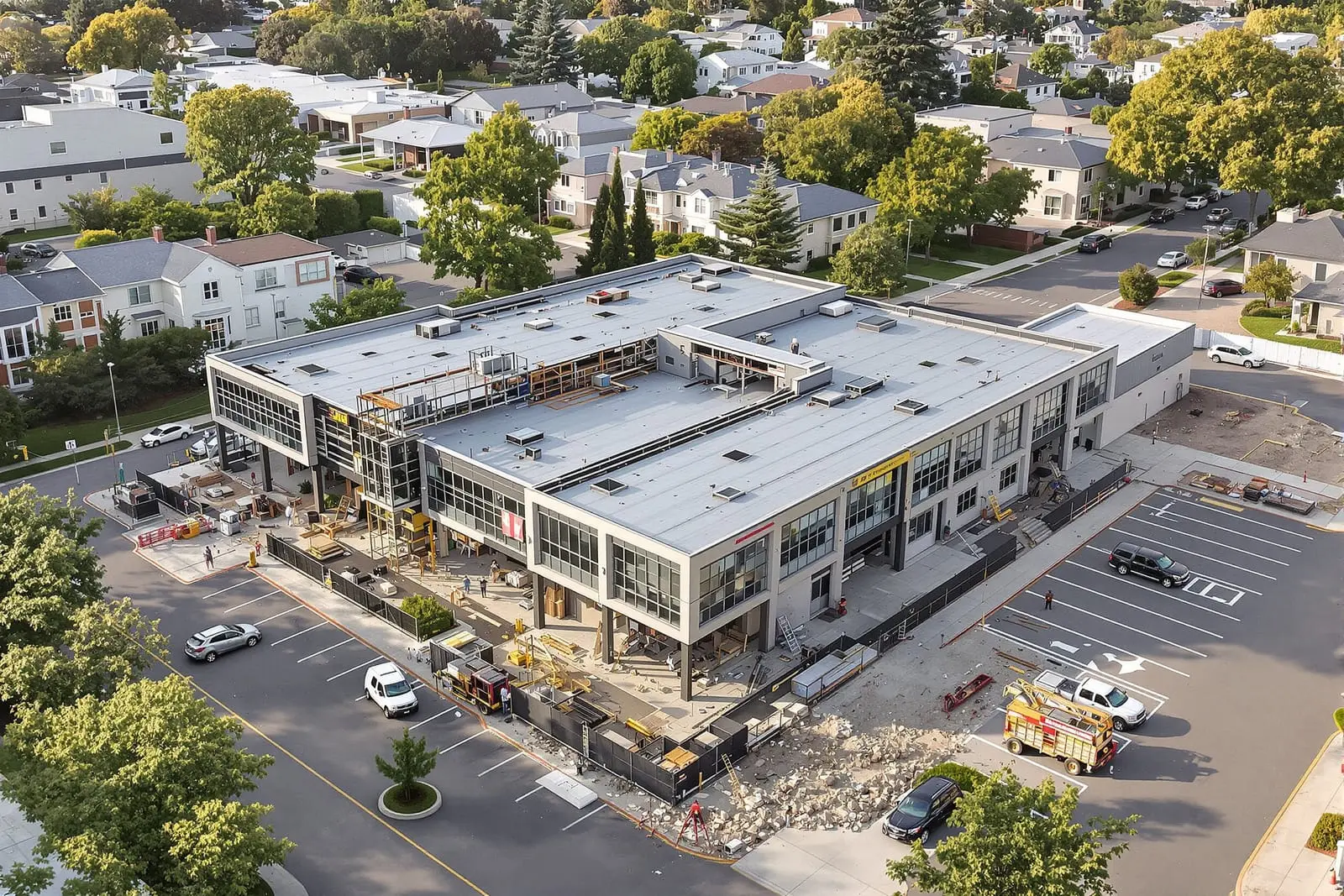
Our medical and healthcare facility demolition services in Pittsburgh, PA respect the strict requirements of clinical environments. We carefully remove exam rooms, labs, imaging suites, and support spaces with infection control measures and low noise methods where needed. Coordination with facility staff keeps patient care and operations running smoothly.
Wrexo Demolition Pittsburgh provides professional medical facility demolition throughout Pittsburgh, PA and the surrounding area. Our licensed, insured crew delivers safe, clean, on-time work with a free estimate before anything begins. Call (412) 618-0591 or request your free quote.
Specialized Medical Facility Demolition in Pittsburgh
Medical and healthcare facility demolition is very different from tearing down a house or a standard commercial building. It involves infection control, regulated waste streams, sensitive medical gases, and complex mechanical and electrical systems that must be taken apart in a specific order. Wrexo Demolition Pittsburgh focuses on these healthcare environments so your project stays compliant, safe, and on schedule.
We work on hospitals, outpatient centers, surgical suites, imaging departments, dental offices, urgent care clinics, research labs, and medical office buildings throughout the Pittsburgh region. Whether you need a single MRI room demolished inside an active hospital or a full floor of patient rooms cleared for renovation, we plan the work around ongoing operations and strict healthcare protocols.
Our team understands local Pittsburgh conditions too. Older healthcare buildings in this area often contain legacy steam lines, outdated oxygen piping, asbestos fireproofing, and lead paint. We identify and manage these risks early so they do not derail your schedule or budget.
Pre-Demolition Assessment and Infection Control Planning
Every medical facility demolition starts with a detailed assessment. Wrexo Demolition Pittsburgh walks the site with your facilities team, infection control staff, and project designer to map out utilities, critical adjacencies, and circulation paths. We identify active patient care areas, sterile corridors, labs, pharmacies, and clean supply routes so demolition activities do not compromise care or cleanliness.
We coordinate an Infection Control Risk Assessment (ICRA) specific to the scope of demolition. This typically includes containment barriers, negative air machines, HEPA filtration, and dust monitoring. In many Pittsburgh hospitals, we build rigid wall systems instead of soft plastic where required by facility policy, then seal penetrations and test air pressure differentials.
Before any wall is opened, we verify shutoff and lockout of medical gases, vacuum lines, oxygen, nitrous, and any specialized systems such as anesthesia gas scavenging. We also locate nurse call, fire alarm devices, and life safety circuits that must remain live for neighboring departments. Careful pre-demolition planning keeps patient areas operational and compliant during the entire project.
Selective Interior Demolition in Active Healthcare Spaces
Most medical facility demolition in Pittsburgh is selective interior work rather than complete teardown. Wrexo Demolition Pittsburgh specializes in surgical and imaging suite gut outs, patient room floor renovations, and clinic reconfigurations while the rest of the building stays open.
We typically begin by removing nonessential fixtures and casework, then work inward to ceilings, partitions, and MEP (mechanical, electrical, and plumbing) systems. Ceiling removal is sequenced carefully so above-ceiling dust and debris do not migrate into occupied corridors. In ICRA controlled areas, we often use zip walls or rigid containment combined with sticky mats and designated debris routes.
Noise and vibration are especially critical around PACU, NICU, and imaging areas. We schedule heavy breaking or coring outside of sensitive hours as directed by your facility, which in Pittsburgh often means early mornings or late evenings to avoid peak clinic volumes. When necessary, we use low vibration techniques, smaller electric tools, and saw cutting instead of impact equipment to protect adjacent procedures and equipment calibration.
Handling Regulated Materials, Medical Equipment, and Building Hazards
Healthcare demolition generates more complex waste streams than standard commercial work. Wrexo Demolition Pittsburgh coordinates with your environmental services and infection control teams to confirm that all sharps, biohazard waste, and pharmaceuticals have been removed before demolition. If we encounter unexpected medical waste, we stop work in the affected area and follow your facility's protocols for cleanup and documentation.
Old imaging, radiation, and treatment rooms are common in Pittsburgh facilities and often involve lead lined walls, doors, and glass. We separate lead shielding, label it, and send it to approved recyclers or disposal sites following Pennsylvania regulations. For nuclear medicine and radiation oncology spaces, we coordinate with your radiation safety officer for clearance documentation before removing any shielding.
Many older Western Pennsylvania healthcare buildings contain asbestos floor tile, pipe insulation, and fireproofing. We bring in licensed abatement partners as needed, and we sequence demolition so that no one disturbs suspect materials until testing and abatement are complete. This approach reduces unplanned shutdowns and change orders.
Large medical equipment, such as MRIs and CT scanners, often must be removed before or during demolition. We coordinate rigging, shielding removal, and structural opening sizes with your vendors, and we protect paths through existing corridors and entrances to avoid damage to active areas.
Structural Changes, Utility Isolation, and Safety Controls
When medical facility demolition involves structural changes, such as removing load bearing walls to expand ORs or ICUs, Wrexo Demolition Pittsburgh works closely with your structural engineer. We install temporary shoring, verify load paths, and only proceed with removals once all approvals are in place. In multi story Pittsburgh hospitals built on tight urban sites, this step is critical to maintain the integrity of floors above and below the work area.
Electrical and mechanical systems in healthcare buildings are usually layered from multiple renovations over decades. Before demolition, we create a utility isolation plan: tracing feeds back to panels, labeling life safety circuits, and confirming which systems are being abandoned versus relocated. Critical systems like emergency power, fire alarm, medical vacuum, and nurse call require extra verification before anything is cut.
Safety controls extend beyond our work zone. We mark and protect egress routes, coordinate with your fire marshal if alarm devices or sprinklers are temporarily affected, and maintain clear communication with security and facilities. In winter, Pittsburgh snow and ice can affect exterior access for debris removal, so we plan safe staging, snow clearing, and slip prevention around dumpsters and loading areas.
Cost Factors and Scheduling Considerations in Pittsburgh
The cost of medical facility demolition is driven far more by complexity than square footage. Wrexo Demolition Pittsburgh typically sees four main cost drivers: level of infection control required, presence of hazardous materials, degree of MEP disentangling, and the need to maintain operations nearby.
Projects that require rigid negative pressure containment, around the clock monitoring, and night shift work will cost more than similar sized jobs in vacant spaces. Likewise, older Pittsburgh facilities with asbestos, extensive lead shielding, or undocumented utilities require more investigation and labor. If your building has been renovated many times, expect more time spent locating abandoned utilities and verifying what is still active.
Scheduling is also influenced by local conditions. In Pittsburgh, heavy snow or severe cold can slow exterior debris handling, so interior only work can be more efficient from late fall through early spring when patient volumes may also be more predictable. If your project needs exterior access for large equipment removal or structural modifications, late spring through early fall usually offers smoother logistics.
To control cost, we recommend that facilities provide as-built drawings and previous renovation records, decide early which equipment will be removed or reused, and involve infection control and facilities teams from the start. A clear scope and access plan keeps change orders to a minimum.
Why Healthcare Owners and Contractors Choose Wrexo Demolition Pittsburgh
Owners, general contractors, and facility managers across Pittsburgh rely on Wrexo Demolition Pittsburgh because we treat medical facility demolition as a technical discipline, not just heavy labor. Our crews are familiar with hospital culture, understand that patient care always comes first, and are comfortable working under strict badge, escort, and PPE requirements.
We coordinate closely with your project team, from preconstruction budgeting through punch list. That includes phasing strategies for multi stage renovations, separation of clean and dirty paths, and communication protocols for unexpected conditions. Our aim is to remove what you no longer need without interrupting the life safety and clinical functions you must keep.
If you are planning a renovation or decommissioning of a healthcare space in Pittsburgh, from a single clinic to an entire hospital wing, we can walk the area with you, identify risk points, and provide a detailed demolition plan and cost breakdown. Wrexo Demolition Pittsburgh is prepared to handle the complexity so your designers, builders, and medical staff can focus on the new space that will replace it.
“
Professional medical and healthcare facility demolition, done right the first time, quality materials, honest pricing, and results that last.
Wrexo Demolition Pittsburgh
Medical and Healthcare Facility Demolition Across Our Service Area