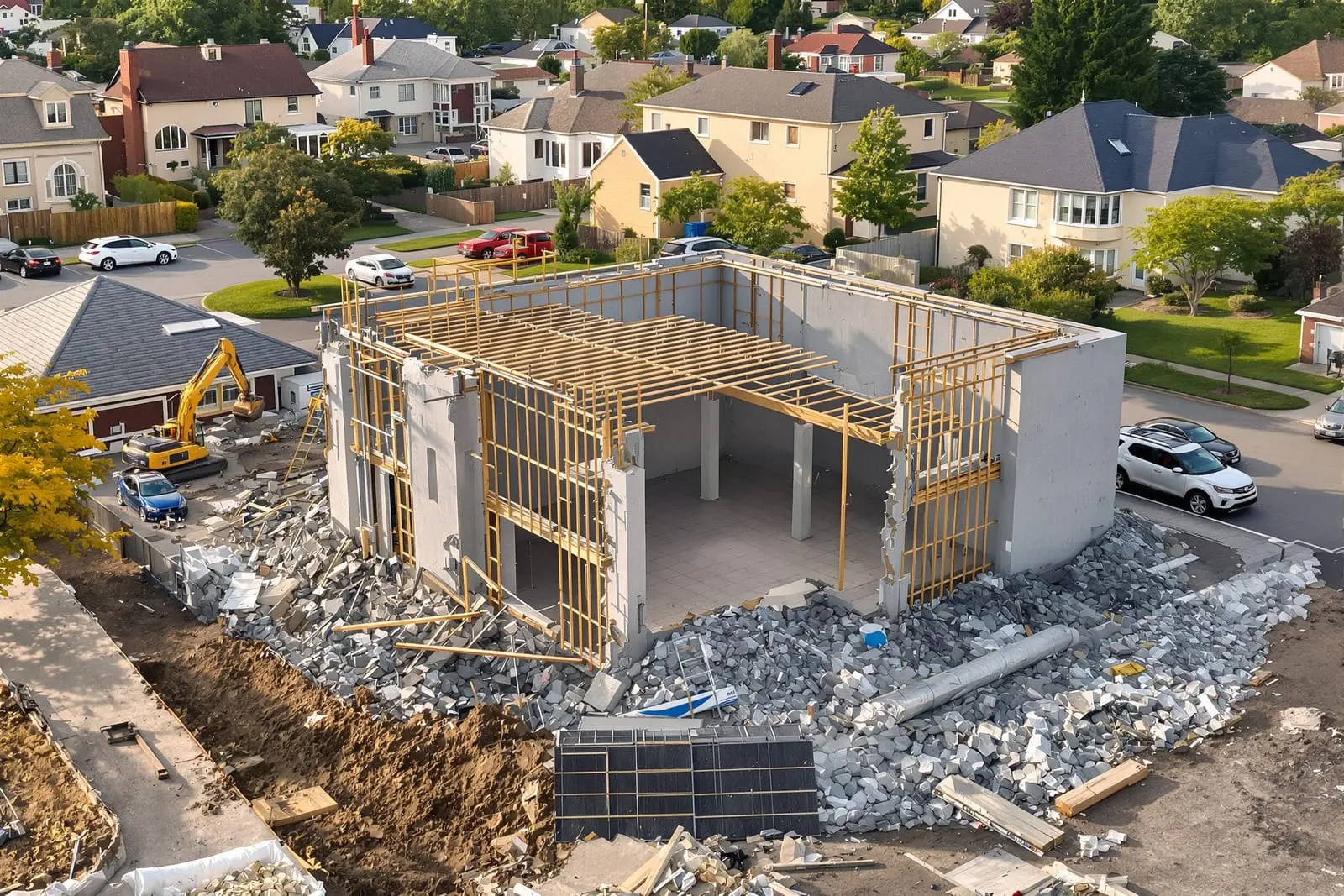
We specialize in structural building demolition in Pittsburgh, PA for commercial, institutional, and industrial properties. Our team evaluates structural systems, plans engineered sequences, and uses heavy equipment to bring buildings down safely. From utility coordination to debris recycling, we manage every phase of complex demolitions.
Wrexo Demolition Pittsburgh provides professional structural building demolition throughout Pittsburgh, PA and the surrounding area. Our licensed, insured crew delivers safe, clean, on-time work with a free estimate before anything begins. Call (412) 618-0591 or request your free quote.
Structural Building Demolition in Pittsburgh That Respects Your Site and Your Neighbors
Structural building demolition is not just knocking a structure down. In Pittsburgh, with our hillsides, tight city lots, and older masonry construction, it is a careful engineering process. Wrexo Demolition Pittsburgh focuses on taking apart the load‑bearing system of your building in a controlled way so the structure comes down safely and your project can move forward on schedule.
Whether you are removing a small commercial block in Lawrenceville, a damaged residential structure in McKees Rocks, or an obsolete industrial building along the rivers, the approach changes based on the frame type, age, and condition. We start by identifying how the building stands up today, not how the blueprints say it should. Many Pittsburgh buildings have been altered over decades, so we never assume walls are nonstructural without verifying.
Our crews work with the surrounding community in mind. We plan truck routes to reduce impact on school zones and narrow side streets, time noisy operations around nearby business hours whenever possible, and keep dust and debris within your property lines. Structural building demolition should leave you with a clean, properly prepared site, not strained relationships with neighbors.
How Wrexo Demolition Pittsburgh Evaluates a Structure Before Demolition
Before a single wall is touched, we perform a detailed structural assessment. A project manager walks the entire building, including the roof and basement, looking for load‑bearing walls, columns, beams, truss systems, shear walls, and any signs of structural distress like bowed masonry or fire‑damaged framing.
We review any available drawings, but in Pittsburgh we find many older structures either have no plans or the plans do not match what was built. In those cases, we rely on field investigation, probing walls and floors where needed, to confirm how loads are transferred. This prevents accidental removal of critical supports that could cause an unplanned collapse.
The assessment also covers materials and hazards. We test for asbestos in pipe insulation, floor tiles, roofing, and plaster, and for lead in paint and certain coatings. Many pre‑1980 buildings in Pittsburgh contain at least one of these materials. If hazardous materials are found, we schedule abatement before structural demolition begins, as required by Pennsylvania and Allegheny County regulations.
Finally, we look outward. We document the distance to neighboring buildings, overhead power lines, retaining walls, and underground utilities. Steep slopes and older sandstone retaining walls are especially common around Pittsburgh, so we consider how vibration and excavation might affect them. All of this feeds into a site‑specific demolition plan that you can review before we mobilize.
Our Structural Demolition Process Step by Step
Wrexo Demolition Pittsburgh follows a clear sequence so you know what will happen and in what order.
1) Utility coordination and shutdown: We contact utility providers and verify shutoffs for electric, gas, water, sewer, and communications. In older city neighborhoods, utility records are often incomplete, so our crews perform test digs and visual trace when needed.
2) Interior soft strip: Before touching the main structure, we remove nonstructural items such as interior doors, fixtures, cabinetry, and finishes. This reduces debris volume and allows better access to key structural elements.
3) Hazard removal and separation: Any identified asbestos or other regulated materials are removed by licensed abatement contractors under containment. We also separate recyclable metals like steel beams and copper piping early, so they are not contaminated by mixed debris.
4) Structural sequencing: Based on the plan, we begin dismantling the load‑bearing system from the top down or the outside in, depending on the building. For a masonry bearing‑wall structure, this may mean peeling the roof and upper courses of brick first. For a steel frame, we may cut and lower beams bay by bay with mechanical equipment or cranes.
5) Controlled mechanical demolition: Using excavators with concrete pulverizers, shear attachments, and hydraulic hammers, we bring the structure down in planned sections. Our operators are trained to avoid overreaching and to maintain a safe working radius from property lines and nearby structures.
6) Debris sorting and loading: As debris is generated, we sort concrete, masonry, metal, and wood. Recyclable materials are loaded into dedicated containers, which can reduce your disposal cost. Mixed waste is removed promptly so the site remains orderly and safer for all trades.
7) Final grading and verification: After the structure is removed, we rough grade the site and, if your project requires it, prepare subgrade for new construction or backfill basements to local standards. We provide haul tickets and recycling records so you have documentation for lenders, buyers, or green building programs.
Equipment and Methods Matched to Pittsburgh Building Types
No single method works for every structural building demolition project. In Pittsburgh, we encounter a mix of brick row buildings, concrete industrial plants, steel‑framed warehouses, and wood‑frame multi‑story housing. Wrexo Demolition Pittsburgh selects equipment and techniques based on what will control collapse direction, limit vibration, and keep your costs reasonable.
For tight urban lots in neighborhoods like Bloomfield or the South Side, we typically use smaller excavators with high‑reach attachments that can work within limited setbacks. This allows us to nibble the structure away rather than push it over in one move. Where access is extremely limited, we may combine mechanical demolition with selective hand demolition to safely separate party walls or shared chimneys.
For heavy concrete structures, such as old mills or parking decks, we rely on excavators with concrete processors that crush and break concrete while shearing rebar for easy recycling. This method is slower than simple impact, but it produces more manageable pieces and fewer vibrations, which is important near older foundations and retaining walls.
Implosion with explosives is rarely needed for typical local projects and is used only when a structure is too large or too constrained for mechanical methods. When it is appropriate, we bring in licensed blasting experts and coordinate with city officials, first responders, and neighbors well in advance. You will know early in planning whether implosion is even being considered for your site.
Throughout the work, we use water spray systems to control dust, particularly important around occupied homes and businesses. In winter, when water can freeze and create slip hazards, we adjust schedules and methods and may switch to mist systems and more frequent cleanup to keep the site safe.
What Drives the Cost of Structural Building Demolition
Structural building demolition pricing is shaped by more than just square footage. Wrexo Demolition Pittsburgh walks you through the main cost drivers so you can plan your budget and compare bids fairly.
Structural complexity is usually the first factor. A simple one‑story steel building with clear spans is quicker to bring down than a multi‑story brick structure with thick bearing walls and interior columns. Buildings built into Pittsburgh hillsides or over existing basements can require specialized shoring and fill, which adds time and material.
Hazardous materials have a major impact on cost and schedule. If asbestos, lead, or PCB‑containing components are present, state and county rules require certified abatement before structural demolition. We coordinate closely with abatement contractors so downtime is minimized, but the testing, permits, and removal work are separate line items you should expect in any realistic proposal.
Site access and trucking distance also matter. Narrow alleys, low bridges, or limited staging areas can require smaller equipment, more hand work, and more trips to disposal or recycling facilities. In more congested parts of Pittsburgh, we may need to schedule hauling during off‑peak hours, which can affect labor costs.
Finally, waste handling choices influence your bottom line. By separating metals and clean concrete for recycling, you can reduce tipping fees. We design a debris management approach that balances your schedule, environmental goals, and budget, and we spell those assumptions out in writing so you know exactly what you are paying for.
Permits, Regulations, and Seasonal Timing in Pittsburgh
Structural building demolition is tightly regulated in Pittsburgh and Allegheny County, and missing a step can delay your project. Wrexo Demolition Pittsburgh assists with permit preparation and coordinates with the City of Pittsburgh Department of Permits, Licenses, and Inspections or the relevant suburban municipality.
Before work begins, you will typically need a demolition permit, proof of utility shutoffs, and, in many cases, an approved site plan or erosion and sediment control plan. For larger commercial or industrial structures, additional reviews related to stormwater, traffic control, or historic status may apply. We help identify which requirements are relevant to your site so there are no surprises mid‑project.
Allegheny County Health Department rules govern asbestos inspection and notifications. Even if you believe there is no asbestos, an inspection by a licensed professional is required for most structures. We can refer you to qualified inspectors and schedule work around the necessary notification windows.
Seasonal timing also matters here. In Pittsburgh, the best windows for structural building demolition are typically late spring through late fall, when freezing conditions and snow are less likely to interfere with dust control and trucking. Winter work is possible, and we do it when needed, but it often requires more planning for site access, ice management, and shorter daylight hours. If your redevelopment has a tight schedule, contacting us several months before your desired start date helps ensure permit approvals line up with your construction plans.
How to Choose a Structural Demolition Partner in Pittsburgh
Selecting the right contractor for structural building demolition can prevent costly delays and neighborhood issues. Wrexo Demolition Pittsburgh recommends asking any potential partner for details, not just a lump‑sum number.
Request a written demolition plan that explains the proposed sequence of work, equipment to be used, dust and noise controls, and how they will protect adjacent properties. In older Pittsburgh neighborhoods, you should also ask how they will handle shared walls, close property lines, and existing retaining walls. A vague answer here is a warning sign.
Verify that the contractor is properly insured for structural demolition, not just light interior work. Ask for references from recent projects with similar structural types and site conditions, for example brick commercial buildings in the city or hillside residential structures. A local track record means the team understands Pittsburgh utilities, traffic patterns, and permitting offices.
Finally, consider communication. Structural demolition often sets the pace for the rest of your project. We provide clear schedules, daily or weekly progress updates depending on project size, and a single point of contact who can coordinate with your general contractor, engineer, or architect. When Wrexo Demolition Pittsburgh finishes a structural demolition, you should have a site that is ready for the next trade, complete documentation for your records, and confidence that the work was done safely and in line with local requirements.
“
Professional structural building demolition, done right the first time, quality materials, honest pricing, and results that last.
Wrexo Demolition Pittsburgh
Structural Building Demolition Across Our Service Area